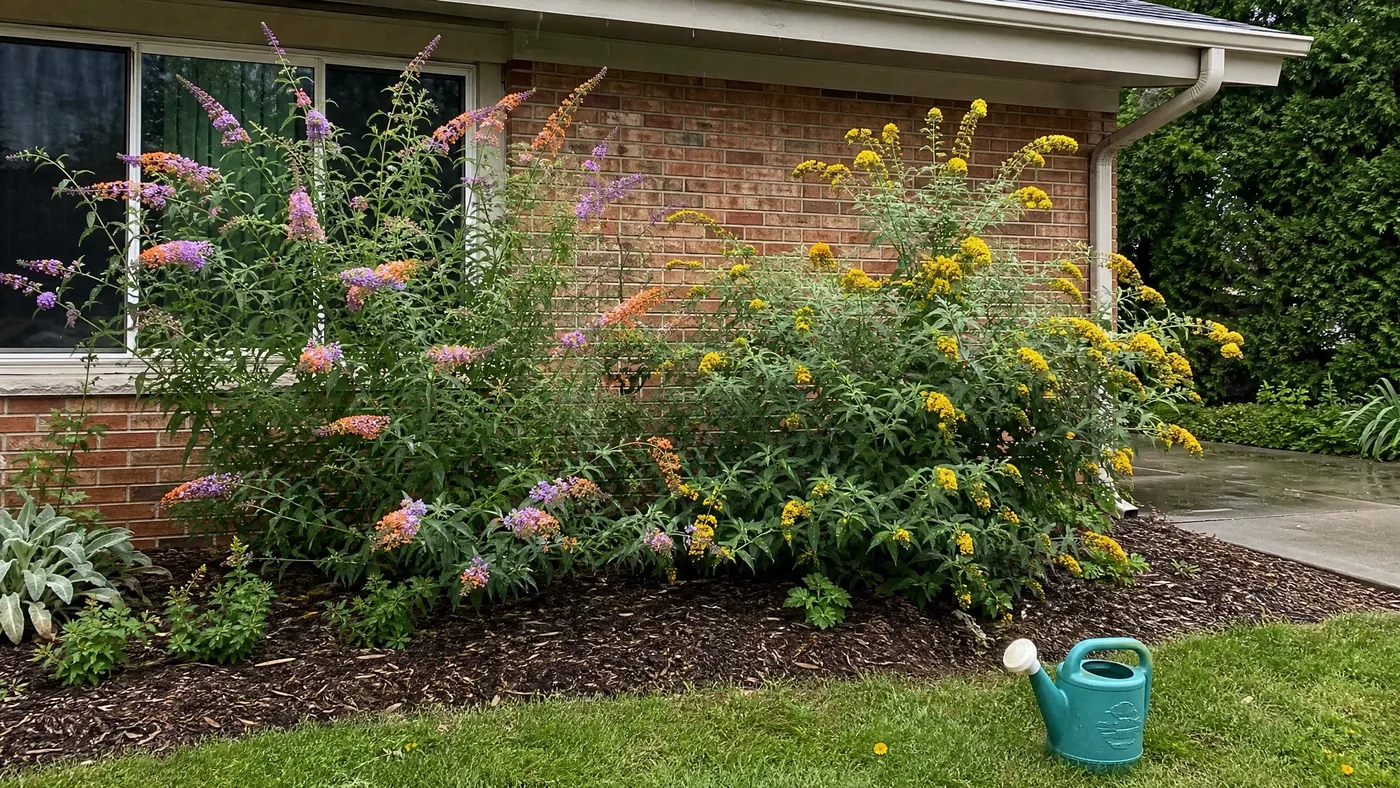
Bicolor Butterfly Bush vs Honeycomb Butterfly Bush
Your shrub has round, whorled flower clusters and no single tapering spike, so which of the two weyeriana plants do you actually own? The answer matters because one number separates them in the cold: Honeycomb is rated hardy to zone 5b, and its weyeriana parentage can die back to the roots in zones 5b or 6. That changes how you prune, where you plant and what you can expect in spring.
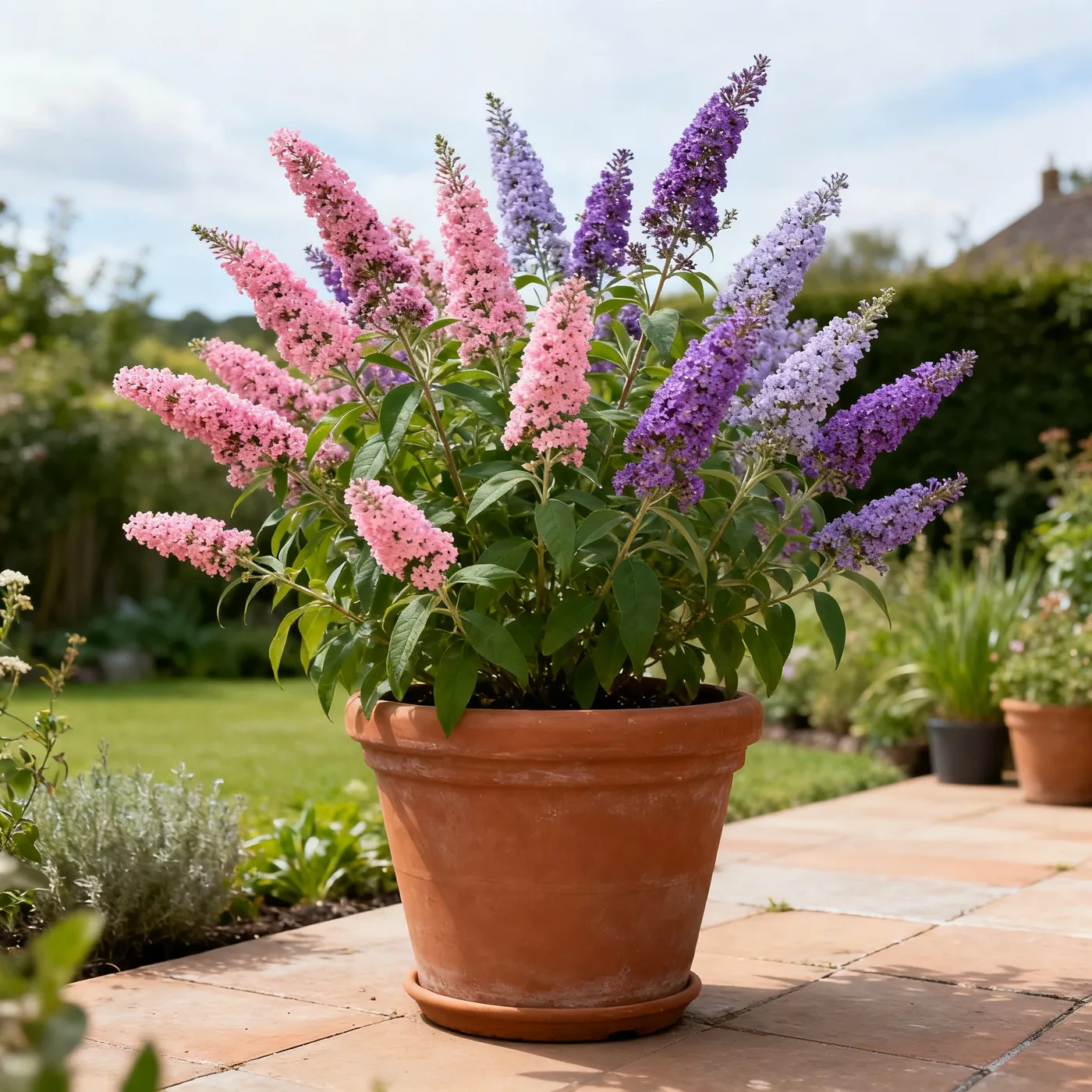
Bicolor and Honeycomb look like close cousins because they are. Bicolor is Honeycomb crossed with a davidii cultivar, so the two share a flower structure but not a temperament.
We'll walk you through how the two plants are related, then how their flowers and scent differ, how to tell them apart at a nursery, how to prune each one, and where each belongs in a yard. Then we'll say which one we'd choose and for whom.
Two Weyeriana Cousins With One Whorled Look
Before comparing them, it helps to know how the two plants are related, because their shared flower shape comes straight from that family tree.
What Honeycomb Hands Down
Bicolor is a cross of Honeycomb and an unknown cultivar of Buddleja davidii. So Honeycomb is the parent and Bicolor is the seedling, which is closer than the usual look-alike pairing. Honeycomb itself is a Buddleja x weyeriana selection, a hybrid group with arching, spreading stems and round flower clusters. Honeycomb is listed at 5 to 7 feet tall and 4 to 5 feet wide, with stronger branches than the weyeriana type.
Those round clusters are the whorled look you see in both plants. The weyeriana type carries them in terminal panicles, so what looks like a string of small globes along the stem is really one panicle built from balls.
What the Davidii Side Changes
A typical davidii cultivar such as Black Knight carries one long, tapering cone of flowers on the end of each stem. Bicolor does not look like that, because the Honeycomb parent still sets the cluster pattern. What the davidii parent adds is a different flower palette and, we find, more drive. The davidii species is lilac with an orange throat, which is a long way from Honeycomb's yellow.
If you have read our comparison of Bicolor and Miss Ruby, that was a davidii-shaped contest. This one is closer, because the flower form is shared and only color and vigor really separate the plants.
Two-Tone Bicolor Butterfly Bush Meets Honeycomb Yellow
Color is the first thing you will notice, and scent is the thing you will remember, so we start there before looking at habit.
The table below sets the two plants side by side using what the sources document. Where they are silent, we say so rather than guess.
| Trait | Honeycomb | Bicolor |
|---|---|---|
| Flower color | Yellow with orange centers | Two-tone, a mix drawn from the yellow-orange parent and a davidii cultivar |
| Flower form | Globe-shaped panicles | Rounded clusters inherited from Honeycomb |
| Fragrance | Weyeriana flowers are described as fragrant | Shares the fragrant parent, so smell it in bloom |
| Size | 5 to 7 feet tall, 4 to 5 feet wide | See our size guide, as it varies with pruning and site |
| Cold hardiness | Hardy to zone 5b | See our hardiness guide for zone detail |
How the Colors Read in the Garden
Honeycomb is a warm, solid yellow with orange centers, and it glows at dusk against green foliage. Bicolor splits its palette, so the clusters look layered up close and blended from a distance. We do not promise one exact shade pair, because the davidii parent was never named and flower color shifts with light and weather. Our Bicolor bloom guide covers the season in detail.
Scent and Visitors
The weyeriana type is the fragrant one in the sources, and it draws butterflies, bees and hummingbirds. Honeycomb is the plant to put beside a path or patio where you will lean in. Bicolor shares that parent, so expect scent, but the sources do not rank the two in strength. If fragrance decides your purchase, smell both in bloom before you commit.
Spotting the Difference Before You Buy
Plants in pots at a nursery are often out of flower, and tags get swapped. Use the cues below in order, and stop when one gives a clear answer.
If the Plant Is in Bloom
Solid yellow with orange centers means Honeycomb. Any flower that shows a second color, or purple tones, points to Bicolor. If the cluster is a long cone with no round structure, it is probably a plain davidii that has been mislabeled, and neither of these plants.
If It Is Not in Bloom
Look at the leaves and the habit. The weyeriana type has lance-shaped leaves to about 8 inches long, gray-green when young, on long arching stems. Honeycomb keeps that arching, spreading habit most clearly. A more upright, vigorous plant with the same leaf shape suggests Bicolor. Customers usually ask us whether a tag is enough, and our answer is no, because leaf and habit tell you more than a label does.
Buying Checklist
Run through these points at the bench, and read our buying guide for plant health.
- Ask for a photo of the plant in bloom if none of the pots are flowering.
- Check for new growth at the base, which shows the roots are alive and the plant has not been cut back by cold.
- Pick the plant with the more arching stems if you want Honeycomb, and the more upright one if you want Bicolor.
- Reject any pot where the flowers form a single long spike.
Pruning Honeycomb Wrong, Bicolor Butterfly Bush Right
Most butterfly bush advice says to cut hard every spring. That suits some plants and hurts others, so each of these two needs its own approach.
The Wrong Cut on Honeycomb
The common mistake is shearing Honeycomb into a tight, low mound each spring. This plant has an arching, spreading habit and stronger branches, and that shape is much of its appeal. Cut it to a stump and you lose the fountain outline. In zones 5b and 6 there is a second risk: the hybrid may die back to the roots anyway, so you can lose live wood by cutting before you know what survived.
What we tell customers is to wait until buds swell, remove only what is clearly dead, and then shape lightly.
The Right Cut on Bicolor
Bicolor takes more of a davidii-style prune. Oregon State advises to prune in early spring for control and larger flowers, which are borne on new growth. Because Bicolor has a davidii parent, it responds well to that timing. Do the work once the worst frost has passed, then cut back to strong buds to push fresh stems.
Skipping the cut entirely is the other mistake. The plant gets woody and loose, and flowers move higher out of reach. Our pruning guide gives the full method for Bicolor.
A Simple Rule for Both
If the plant is Honeycomb, prune after you can see what lived. If it is Bicolor, prune in early spring and cut firmly. If you are not sure which one you have, take the gentler route, because a light prune on a Bicolor costs you only a little vigor, while a hard cut on a Honeycomb can cost you its shape.
Bicolor Butterfly Bush in Borders, Honeycomb Alone
The two plants ask for different placements, and the main difference is how much room the arching habit demands.
Why Bicolor Works in a Border
Bicolor is the better team player. Its two-tone flowers blend with companions, and its more upright, vigorous growth fills a back or middle border position without sprawling. Pair it with plants that have fine foliage or flat flower heads so the round clusters stand out. Our landscape design ideas give planting combinations.
Why Honeycomb Wants Open Space
Honeycomb reaches about 5 to 7 feet tall and 4 to 5 feet wide with arching stems. Crowd it and the stems bend into neighbors, and the plant loses the fountain shape that makes it special. Give it open ground, a lawn edge or a corner where nothing competes with that outline. Yellow flowers also read more strongly on their own than against busy beds.
What Both Need in Any Spot
Full sun matters for both. Without it, the shrub can become weedy with diminished flowering. Choose the sunniest spot in the yard for either plant, and give it a bit more space than looks necessary when you plant.
When Bicolor Butterfly Bush Wins the Spot
Honeycomb is lovely, but there are clear conditions where we would choose Bicolor first.
Colder Zones and Uncertain Winters
The davidii species is winter hardy in zones 5 through 9, and Honeycomb's weyeriana side is less hardy than other Buddlejas. In zones 5b and 6, where that die-back risk is real, a plant with a davidii parent is the safer starting point. Our winter care guide covers how to protect it.
Mixed Borders and Bigger Color Goals
If you want a plant that blends into a mixed planting and still holds its own, Bicolor is the better choice. The two-tone blooms pair with more neighbors than a solid yellow does. It also suits people who want vigor, because it grows with more energy than its parent.
When Honeycomb Is Still the Answer
Choose Honeycomb if you want a single golden specimen, a fragrant plant near a seat, or the clean arching outline on its own. It is the better pick where you have open space and a mild enough climate.
Choosing One, Then Adding the Other
You do not have to pick only one, and the two plants grow well together if you plan the spacing.
Start with the plant that fits your climate and space, then add the second a season later once you have seen how the first performs. Keep them several feet apart so Honeycomb's arching stems have room, and put Bicolor nearer the border edge where its upright growth fits. Both want full sun, neutral soil in the range of pH 6.0 to 8.0 and drainage, which means one watering and feeding routine covers both.
Planted together, they bridge a long bloom window. The davidii species blooms June to September, and the pair gives you yellow and two-tone color in the same view, with the same butterflies moving between them.
Picking Your Butterfly Bush Pair
The difference comes down to climate, space and what you want to look at. Honeycomb is the fragrant, solid yellow, arching specimen. Bicolor is the vigorous, two-tone, border-friendly seedling. Match the pruning to the plant, and check the leaf and habit before you buy.
Bicolor Butterfly Bush
Nursery-grown Bicolor Butterfly Bush in sizes from Quart, shipped to your door.
From $25.33
Shop Now →If your main goal is dependable color in a cold zone or a mixed border, choose Bicolor. If your main goal is a single golden, fragrant plant in open space, choose Honeycomb. If you want both, plant one first and add the other. Before a plant leaves us, our growers check it for strong roots, clean foliage and true-to-type growth, and as a small business we want you to open the box and recognize exactly the shrub you chose.