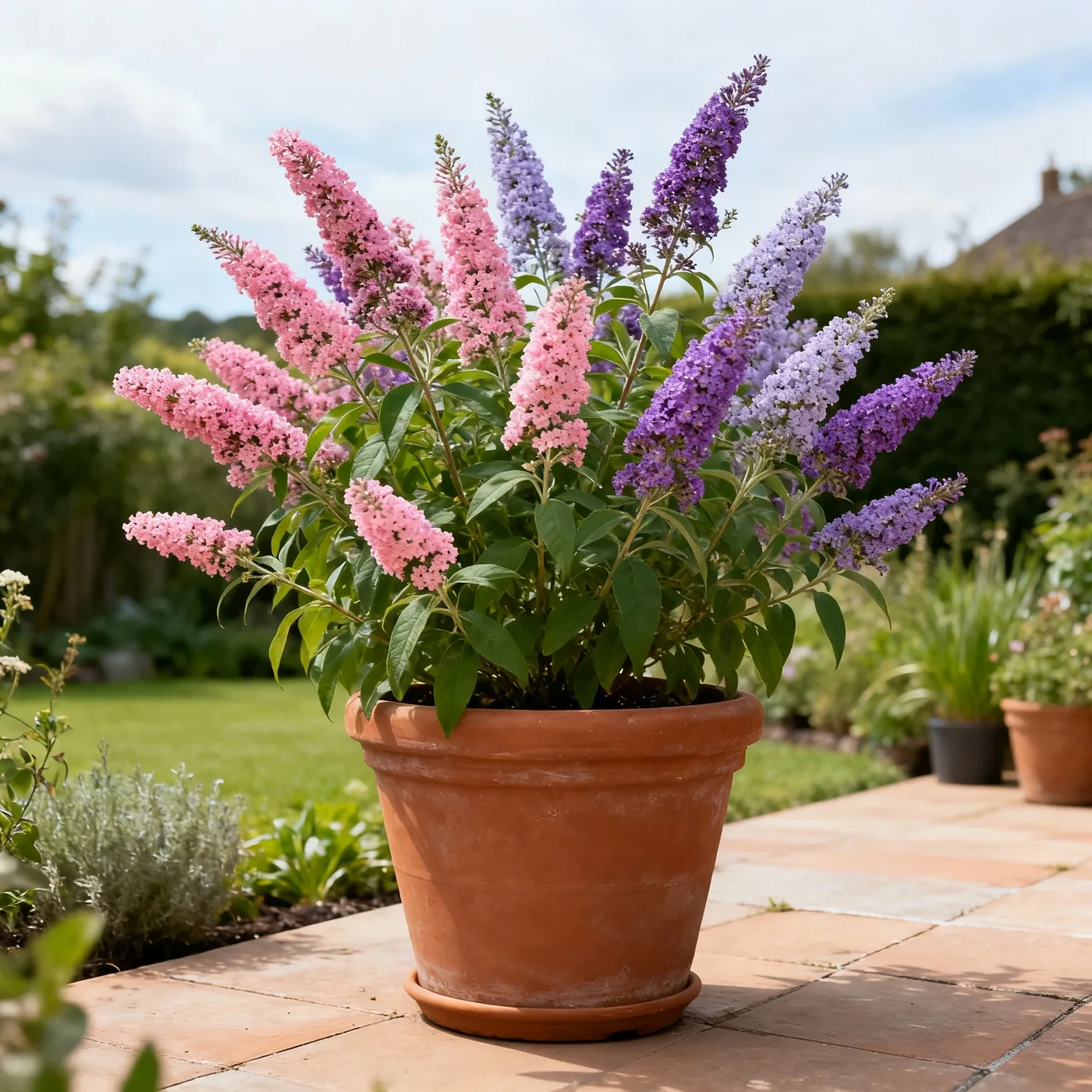
Bicolor Butterfly Bush
Buddleja davidii (Bicolor form)
Bicolor Butterfly Bush, Fast-Growing Summer Bloomer
This size is not in the online store yet. Ask about availability and we will reply with current stock.
- Fast grower reaching 5-8 ft tall in 2-3 seasons, with abundant pink-and-purple flower spikes June through October
- Drought tolerant once established and resistant to deer; thrives in full sun and average garden soil
- Adapts to zones 5-9, blooming reliably the first year and persisting as a woody shrub in mild climates
About this plant
This is a deciduous flowering shrub that grows fast and produces abundant two-tone flower spikes from early summer through fall. It thrives in full sun and well-drained soil, making it ideal for butterfly gardens, cottage gardens, mixed borders, or cutting gardens. Deer typically avoid it thanks to its aromatic foliage. Even zone 5-6 gardeners can grow it as a woody-based perennial.
Your plant comes in either a quart or #1 container, ready to go into the ground or a large pot. Plant on arrival in full sun and well-drained soil. Water moderately the first few weeks, then let natural rainfall sustain it once established. This shrub grows roughly 2-3 feet per year, reaching full size in about two growing seasons.
Bicolor Butterfly Bush at a glance
| Botanical name | Buddleja davidii (Bicolor form) |
|---|---|
| Plant type | deciduous flowering shrub |
| USDA zones | 5-9 (dies back to the ground in zone 5-6 and regrows as a woody-based perennial; fully woody shrub in 7-9) |
| Mature height | 5-8 ft, though some unpruned specimens in mild climates reach 10-12 ft |
| Mature width | 4-6 ft |
| Sun | full sun (6+ hours); blooms and habit both decline noticeably in part shade |
| Water | moderate at establishment, then drought tolerant; avoid standing water |
| Bloom time | early summer through fall, roughly June-September/October depending on region and pruning timing |
| Bloom color | bicolor flower spikes, commonly a two-tone mix of pink/rose and purple/lavender (exact tone combination varies by grower's seed strain, sinc |
| Growth rate | fast, roughly 2-3 ft of new growth per year on established plants |
| Deer resistance | good resistance (aromatic foliage is generally avoided) |
| Best planting time | spring after last frost is preferred; fall planting also works in zones 7-9 |
Container sizes explained
| Quart / QT | A 4 inch pot, roughly one quart of soil. A young starter plant, the most economical way to buy several. |
|---|---|
| #1 / 1 Gallon | A trade one gallon pot (about 6.5 inches). One to two seasons older than a quart, with an established root system. |
Questions before you buy
Should I start with a quart or #1 container?
The quart size is a good entry point if you're budget-conscious or starting a new bed. The #1 container arrives more established and gives you a quicker head start toward mature size, though either size will bloom the first year. For large-scale plantings, consider starting with quarts and spacing them 4-6 feet apart.
When should I plant my butterfly bush after it arrives?
Plant as soon as it arrives in spring or early summer. The more growing season it has before fall, the better established the root system becomes. If planting in late summer or early fall, water more frequently through the first month to help it settle in before winter dormancy.
How big does the Bicolor butterfly bush get?
Mature height is typically 5-8 feet and spread is 4-6 feet, reached in about 2-3 growing seasons. In mild climates with no pruning, some specimens can reach 10-12 feet. Regular pruning keeps it more compact and encourages fuller branching.
How much sun does it need?
Full sun (6+ hours daily) is essential. Blooms and overall plant habit decline noticeably if grown in part shade. Choose a spot that receives direct sun most of the day for the best flower production and shape.
Which hardiness zones does it tolerate?
This shrub thrives in zones 5-9. In zones 5-6, it dies back to the ground each winter and regrows as a woody-based perennial that blooms fresh each summer. In zones 7-9, it persists as a fully woody shrub year-round.
What does the plant need during its first growing season?
Water moderately during the first few weeks to establish roots, then reduce frequency as the plant becomes drought tolerant. Avoid standing water and heavy clay soil. A large container planting (15+ gallons) works well if you prefer growing in a pot, but plan for more frequent watering than in-ground plants.