Is Bicolor Butterfly Bush Real? Its Confusing Names Explained
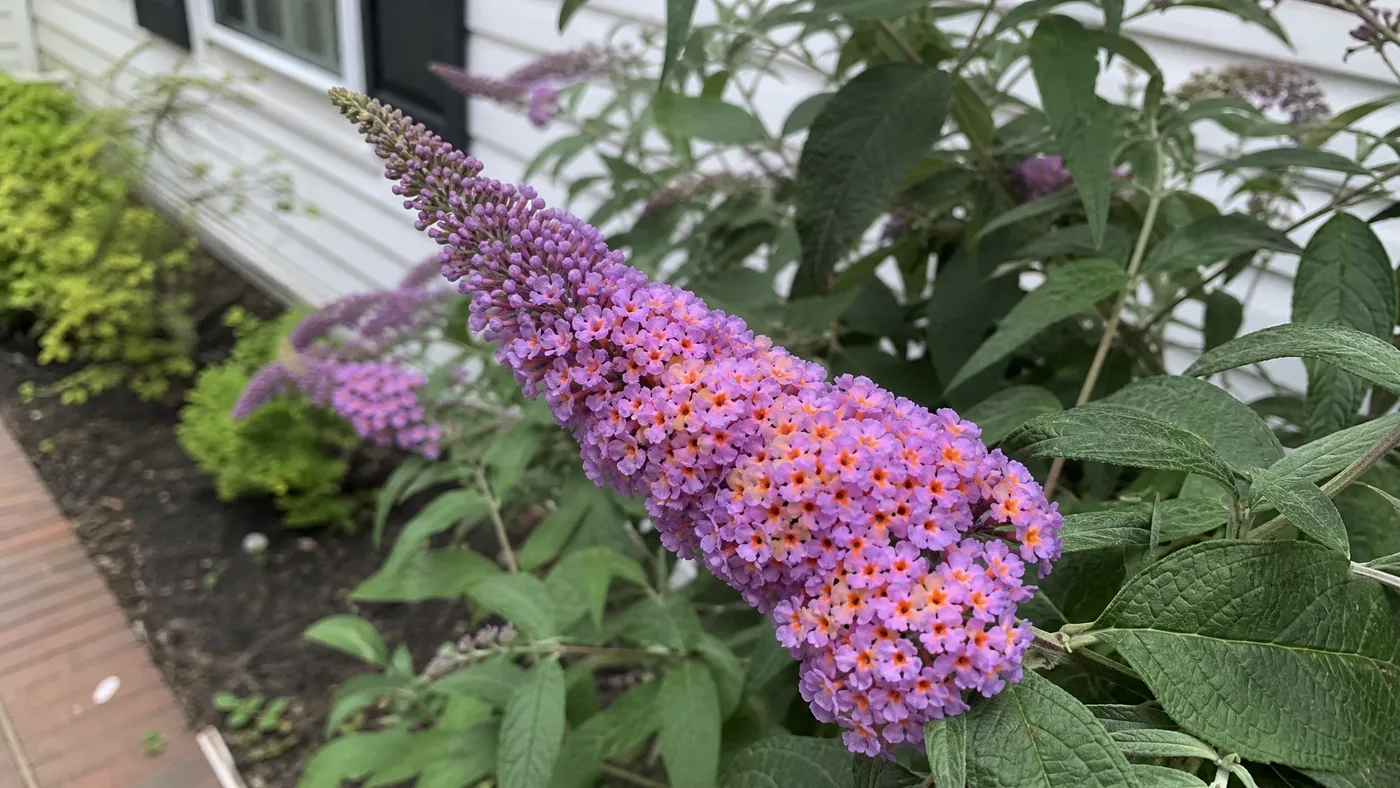
You are holding a nursery photo of a flower spike in pink and orange, and a quiet voice says somebody edited it. Flowers rarely sort themselves into two colors that neatly. The listings you find online do not help, because the same shrub turns up under three or four different names.
That doubt can cost you real money. A shrub bought on the wrong name can be less cold-hardy or a different size than you planned for, and you learn that only after a winter or two in the ground. Read on for the evidence that the two-tone bloom is genuine, the history behind the names, how to read a tag, and what this plant costs in dollars and years.
A Two-Tone Bloom That Is Not Photoshopped
The color pattern is a natural trait of the plant. This section explains where the orange comes from and why photos still deserve some caution.
Orange Belongs on This Shrub
You do not need to take our word for it. The species, Buddleja davidii, is lilac-colored with an orange throat. So the orange was never an add-on. Even the plain species pairs a cool color with a warm one.
The Bicolor is the form where that pairing is easy to see from a few steps away. The same university lists a 'Bicolor' with 10-inch panicles in deep purple with bright orange accents. Two independent descriptions of the same pairing is about as close to proof as a plant database gets.
Why the Colors Read as Two Tones
Each spike is a long cluster of small florets, and the orange sits at the center of the flower. Up close you see an orange eye in a purple or lilac floret. From across a yard, those centers blend into one warm and cool contrast.
That is why the effect looks stronger in a mass of spikes than in a single close-up. It is also why the same plant can read as lilac, lavender or even pinkish in different light, while the orange stays steady.
Reading the Photo Honestly
The trait is real, but we will not claim every listing photo is untouched. Light, camera and the age of each floret all shift what you see.
One of the most common questions we get is whether the picture was edited. Our answer is that the contrast is genuine, but the exact shade varies from plant to plant, and a very saturated photo will look softer on your patio.
Ask a seller for a photo of the actual plant in bloom, and look for more than one image taken in different light. Our guide to bicolor blooms, colors and timing shows how the color changes across a season. Expect flowers from June to September for the species.
Where Bicolor Butterfly Bush Came From
The history has two layers, a wild species and a hybrid relative. The story only makes sense once you see both.
The Wild Species Behind It
Buddleja davidii is native to Tibet and central and south China. It is hardy in USDA zones 5 through 9 and grows 6 to 12 feet high and 4 to 15 feet wide. It tolerates drought, heat, humidity and deer, and it adapts to most soils.
Those traits explain why gardeners took to it, and also why it escaped gardens in some regions, a point we return to below. A tough, fast species with showy flowers is exactly the kind of plant that growers keep reselecting, which is how a long list of colored forms came about.
The Hybrid Side of the Family
The second layer is Buddleja x weyeriana, which was produced by an artificial cross between B. davidii and B. globosa. That page also lists a 'Bicolor' cultivar under it, with the parentage given as 'Honeycomb' crossed with an unknown cultivar of B. davidii.
So one parent of that 'Bicolor' is a weyeriana and the other is a davidii. That helps explain why the plant can show up under either name, and why a tag alone does not settle what you are holding.
What We Cannot Tell You
We cannot give you a breeder's name or an introduction year, because our sources do not contain one. Treat any listing that states a date or a person without saying where it came from with some suspicion.
When a history cannot be traced, the practical test is the plant itself: its flower, its size and its winter behavior in your zone.
Davidii, Weyeriana, and the Tag in Your Hand
Here is the label confusion in one place. The table compares what the university sources say about each parent name, so you can see what each tag implies.
| Trait | Buddleja davidii | Buddleja x weyeriana |
|---|---|---|
| Parentage | A wild species | Artificial cross of B. davidii and B. globosa |
| Hardiness | Zones 5–9 | Zones 6–9, may die back to the roots in zone 5b or 6 |
| Size | 6–12 ft tall, 4–15 ft wide | 5–12 ft tall, 4–8 ft wide, arching and spreading |
| Flower color | Lilac with an orange throat | Yellow or cream with orange centers (the listed 'Bicolor' cultivar is deep purple with orange accents) |
What Each Label Implies
A weyeriana label tells you the seller classes the plant as the hybrid, which is not as winter hardy as other buddlejas. If you garden in zone 5, that single line matters more than any photo.
A davidii label points to the zone 5 to 9 species range. That is the range our hardiness zones guide works from.
Which Label We Use
We grow and label ours as Buddleja davidii, Bicolor form. Our cultivar comparison treats it as a davidii seed strain, and a seed strain can vary a little from plant to plant.
The spelling Buddleia, with an i, is the same genus written the older way. Either spelling can appear on a tag, and neither changes the plant. Searches such as "buddleia weyeriana bicolor" and "buddleja davidii bicolor" are really the same question asked with different spellings and different parent names.
Why Nurseries Rename Bicolor Butterfly Bush
Retailers sell this shrub under competing names for ordinary reasons. Sources disagree, catalogs copy one another, and a catchy trade name sells better than a botanical one.
Trade Names and Competing Labels
You will see names such as Kaleidoscope and Flower Power attached to two-tone butterfly bushes. These are trade names, written for shoppers, and our sources do not confirm which of them is the same plant as the Bicolor on a given tag. If a listing treats them as interchangeable without saying so, treat that as an open question.
Botanical names are not always settled either, as the weyeriana label shows. A catalog that copies another catalog's spelling or parentage will also copy its mistakes, and the error spreads through every listing downstream.
The Regulatory Wrinkle
There is also a regulatory side. Washington quarantines B. davidii except for sterile cultivars, but interspecies crosses where Buddleja davidii is one parent are not quarantined or regulated. Davidii is also labeled a noxious weed in Oregon and Washington.
That gives a seller in those states a reason to prefer a hybrid-sounding name. If you garden there, check your state's rules and your local extension service before you buy under any label.
How to Cross-Check a Listing
Common advice is to shop by the large trade name on the pot. We tell customers to do the opposite and start from the botanical line. Work through these steps with any listing.
- Find the full botanical name and note whether it says davidii or x weyeriana.
- Compare the stated hardiness zones with the table above. A weyeriana tag claiming zone 5 hardiness deserves a question.
- Compare the stated mature size with the ranges above, since the hybrid is narrower than the species.
- Ask the seller whether the plant is a sterile cultivar if you live in Washington or Oregon.
Our buying guide covers the physical checks on the plant itself.
What Bicolor Butterfly Bush Costs Across Five Years
We think about a shrub as a five-year budget, not a single purchase price. We will not quote a dollar figure here, because prices vary with pot size and seller. The parts below follow where the money and the waiting go.
Pot Size and the First Season
The first season is mostly about settling in. Expect regular watering while the roots establish, and a plant that blooms on new growth, since Oregon State notes the flowers are borne on new growth.
We will not put a height on that first summer, because it depends on the pot size and the planting date. Ask the seller what size the pot and plant are, and judge the price against that.
Room and Pruning by Year Three
By the third season, plan for the species range rather than the size you bought. Davidii reaches 6 to 12 feet tall and up to 15 feet wide, and our guide on how big a bicolor butterfly bush really gets explains how to space for it.
The cost here is room and a yearly chore. Oregon State says to prune in early spring to control growth and encourage large flowers which are borne on new growth. Skip that and you pay in a sprawling shrub and smaller spikes.
Winter Loss as the Hidden Cost
Once the plant is at full size, little is left but upkeep. The real budget risk is a hard winter. A weyeriana-labeled plant may die back to the roots in zone 5b or 6, so the cheaper listing can be the costlier one if you replace it.
Big Pot or Small Pot
A bigger pot costs more up front but usually saves a season of waiting. A cheaper small plant costs patience. Neither choice changes what the shrub does in its fifth summer, so pick the one that fits your timeline and your tolerance for an empty corner.
Growing Bicolor Butterfly Bush Once the Name Is Settled
Once you know which plant you have, the care is simple, and it follows from the sources. The name matters most for hardiness and size, not for how you treat the plant day to day.
Site and Soil
Butterfly bush needs full sun, meaning six or more hours of direct light a day, and a neutral soil with a pH of 6.0 to 8.0. It adapts to most soil types, so the main requirement is a sunny spot. Choose that spot before you dig, because a butterfly bush that has to lean toward light blooms thinly.
Bloom and Visitors
Flowers run from June to September for the species. The weyeriana hybrid has fragrant flowers that attract butterflies, bees and hummingbirds, which is a fair picture of the activity around any butterfly bush in bloom. Prune in early spring, then enjoy the show through late summer.
A Real Plant With a Messy Paper Trail
The plant is real, and so is the two-tone bloom. The naming is what is inconsistent, because sellers use davidii, x weyeriana and trade names for the same two-tone shrub, and the sources do not settle which is correct. Plan for five years, not one, and let the zone and mature size decide the purchase.
Bicolor Butterfly Bush
Nursery-grown Bicolor Butterfly Bush in sizes from Quart, shipped to your door.
From $25.33
Shop Now →Before you pay, confirm the full botanical name and the hardiness zones printed on the tag. Every Bicolor we ship is potted by our own growers on our own farms, then packed so it arrives ready to plant.