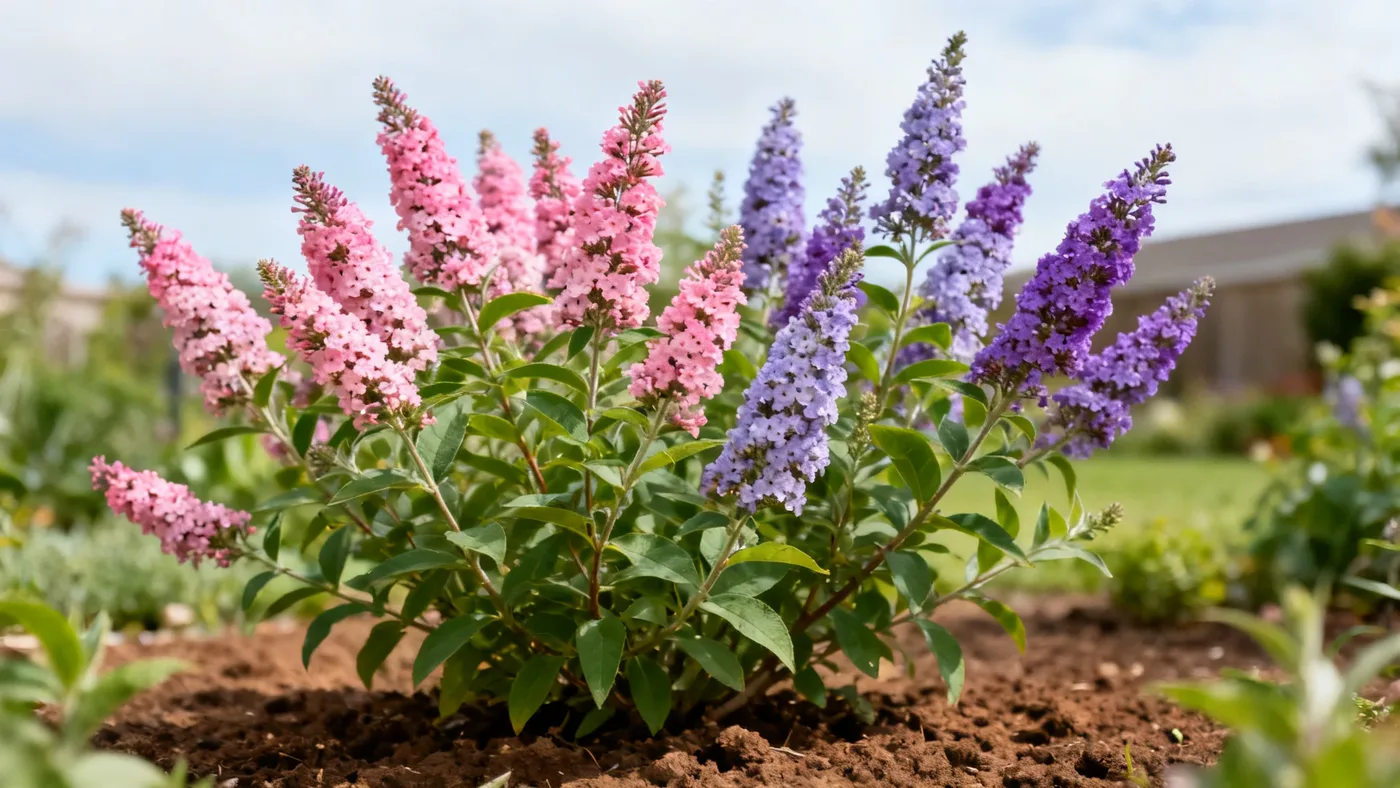
Bicolor Butterfly Bush Hardiness Zones: Where It Thrives
Bicolor Butterfly Bush (Buddleja davidii, Bicolor form) is hardy in USDA zones 5 through 9, but the way it behaves changes significantly depending on your region. In colder zones, winter cold kills the top growth back to the ground; in warmer zones, the plant retains its woody structure year-round. Understanding what to expect in your zone helps you plan pruning, winter care, and realistic expectations for first-year blooms.
Zone Hardiness Basics
What are the hardiness zones for Bicolor Butterfly Bush?
Bicolor Butterfly Bush is hardy in USDA zones 5 through 9. The plant grows as a fully woody, persistent shrub in zones 7 through 9, where winter temperatures rarely drop below 5°F. In zones 5 and 6, the above-ground stems typically die back to the ground in winter, and the plant returns as a woody-based perennial in spring.
Can I grow Bicolor Butterfly Bush in zone 5?
Yes, you can grow Bicolor Butterfly Bush in zone 5, though it behaves differently than in warmer zones. The aboveground growth dies back to the ground each winter, but new stems emerge reliably in spring from the surviving root crown. While you lose height-based structure, the plant will still bloom profusely on new wood by early summer.
Is Bicolor Butterfly Bush hardy in zone 6?
Bicolor Butterfly Bush is hardy in zone 6 and performs similarly to zone 5 climates. Winter dieback to the ground is the typical pattern, with vigorous regrowth starting in spring once soil warms. You'll still enjoy the full blooming season, roughly June through September, since flowers form on new growth.
Will Bicolor Butterfly Bush survive as a woody shrub in my zone?
Bicolor Butterfly Bush will retain its woody structure in zones 7 through 9, where winter temperatures rarely fall below 5°F for extended periods. In zones 5 and 6, the plant is not reliably woody and will die back seasonally; in zones 10 and above, the plant may struggle with excessive heat. Consult your local extension service if you're near a zone boundary or in a region with unpredictable winter swings.
Zone 5–6: Winter Dieback and Herbaceous Growth
What happens to Bicolor Butterfly Bush when temperatures drop below freezing?
In zones 5 and 6, the aboveground stems, leaves, and branch tips are killed by hard freezes. The foliage may blacken or drop before the stems fully die back. However, the root system and the woody base at or just below ground level survive, and new stems emerge in spring once soil temperatures warm.
Do I need to protect my Bicolor Butterfly Bush over winter in zone 5?
No special winter protection is typically necessary in zone 5; the plant's root crown is naturally adapted to cold winters. You may apply 2 to 3 inches of mulch around the base to insulate the root zone, but this is more of a benefit to soil health than a survival requirement. Avoid mulching directly against the stem to prevent rot.
When will my zone 5 Bicolor Butterfly Bush start growing in spring?
New shoots typically emerge in mid to late spring, once soil temperatures reach 50–60°F and the danger of hard frost has passed. Growth is rapid once it begins, often reaching 2 to 3 feet of new stem length in a single growing season. Blooming usually starts 6 to 8 weeks after spring emergence, placing it in early summer for most zone 5 gardens.
Does Bicolor Butterfly Bush ever stay green through winter in zone 6?
In zone 6, mild winters may leave some stems partially intact, but hard freezes will kill any remaining growth back to the ground. Treat your zone 6 plant as though it will die back seasonally to avoid disappointment; any woody stems that survive are a bonus, not the expected outcome.
Zone 7–9: Woody Shrub Behavior
How does Bicolor Butterfly Bush perform in zone 7?
In zone 7, Bicolor Butterfly Bush grows as a fully woody shrub that retains its structure through most winters. Occasional hard freezes may damage some branch tips, but the main framework survives year to year. The plant reaches its full mature height of 5 to 8 feet and widths of 4 to 6 feet, creating a substantial landscape presence.
Will Bicolor Butterfly Bush get bigger in zone 8 or zone 9 than in zone 5?
Yes, the plant grows larger in warmer zones because the woody structure persists and accumulates year after year. Unpruned specimens in mild climates (zones 8–9) may reach 10 to 12 feet tall and equally wide. In zones 5 and 6, height is reset each winter, so mature size is effectively smaller unless you skip pruning for multiple seasons.
Do I still prune Bicolor Butterfly Bush hard in zone 8 or 9?
Yes, hard annual pruning is recommended in all zones where the plant survives. Cut the plant back to 12 to 18 inches from the ground, or to a low framework of woody stems, in late winter or very early spring. Hard pruning encourages dense new growth and abundant blooms on new wood, which is the best way to maintain shape and flowering vigor.
Planting Timing and Establishment
When is the best time to plant Bicolor Butterfly Bush?
Spring after the last frost is the preferred planting time in all zones. This gives the plant time to establish roots and grow through the warm season before winter arrives. Fall planting also works well in zones 7 through 9, allowing time for root establishment before the cooler months.
Can I plant Bicolor Butterfly Bush in fall if I live in zone 5?
Fall planting in zone 5 is not recommended because the plant won't have enough time to establish a robust root system before hard winter freeze. Spring planting ensures the plant has the full growing season to root in and gain vigor before its first winter dormancy.
How long before my newly planted Bicolor Butterfly Bush blooms?
Bicolor Butterfly Bush blooms in the first year when planted from a quart or gallon container. The plant will produce flowers starting in early summer and continuing through fall (roughly June through September or October, depending on your region). Blooms are lighter and stems thinner on first-year plants, but you'll still see the characteristic bicolor flower spikes.
When does Bicolor Butterfly Bush reach full mature size?
The plant reaches its full mature height of 5 to 8 feet and width of 4 to 6 feet in about 2 to 3 growing seasons. In colder zones where winter dieback resets growth each year, reaching full size takes longer and depends on consistent hard pruning. In warmer zones, the accumulating woody framework fills in faster.
Winter Care and Spring Recovery
Should I prune my Bicolor Butterfly Bush before winter or after?
Always prune in late winter or very early spring, never in fall. Pruning in fall stimulates tender new growth that will be killed by the first hard freeze. Wait until late February or March (depending on your zone) to cut the plant back hard, cutting to 12 to 18 inches from ground level.
What should my zone 5 Bicolor Butterfly Bush look like after a hard winter?
After winter, you may see bare, blackened or gray stems sticking up from the ground, or the plant may appear completely dead with no visible growth above soil. This is normal. Once you've pruned the dead wood in spring, new green shoots will emerge within a few weeks as soil warms.
How fast does Bicolor Butterfly Bush grow back after pruning?
Established plants grow roughly 2 to 3 feet of new growth per year on healthy stems. In the first full growing season after planting, growth may be a bit slower as the root system develops. Once established (typically by year two), the plant's growth rate accelerates noticeably.
My Bicolor Butterfly Bush looks dead in zone 6. Should I dig it up?
Do not dig up the plant in early spring, even if it appears completely dead. Scratch the stem gently with a fingernail to check for green wood underneath; if you see any green, the plant is alive. Wait until mid to late spring and watch for new shoots to emerge from the base. If no growth appears by early June, then the plant has died.
Growing in Containers and Zones 5–6
Can I grow Bicolor Butterfly Bush in a container in zone 5?
Yes, Bicolor Butterfly Bush is suitable for container growing in a large pot (15 gallons or larger) with good drainage. Container plants in cold zones should be moved to a sheltered location or overwintered in an unheated garage to protect the root system from extreme temperature swings. Check the soil regularly; containers dry out faster than in-ground soil and may need watering even in winter if the plant is leafy.
Do container plants need more winter protection than in-ground plants?
Yes, roots in containers are more exposed to extreme cold than those in the ground, where soil acts as insulation. In zone 5, move containers to a cold frame or against the south side of a building for winter. Wrap the pot with burlap or move it to an unheated garage if temperatures regularly drop below 10°F in your area.
Troubleshooting Zone-Specific Issues
My Bicolor Butterfly Bush didn't bloom last summer in zone 5. Why?
Insufficient sunlight is the most common cause; the plant needs at least 6 hours of direct sun daily and will bloom poorly in part shade. Inadequate pruning in spring can also delay or reduce blooms. Check that you cut the plant back hard (to 12 to 18 inches) in late winter. If sunlight and pruning are adequate, wait until the plant's second or third year to judge blooming potential.
Is my Bicolor Butterfly Bush dead, or will it grow back?
Scratch the stem gently with a fingernail or knife blade to reveal the color underneath the outer bark. Green wood indicates the plant is alive; brown or gray wood all the way through suggests the stem is dead. If only the above-ground portions are dead and the base remains green, the plant will regrow from the root crown in spring.
Can I grow Bicolor Butterfly Bush in zone 4 or zone 10?
Zone 4 is colder than the plant's hardiness range and is not recommended; winter damage is likely to be severe. Zone 10 is hotter and more humid than ideal, and the plant may struggle with heat stress or fungal issues. For zones outside 5 to 9, consult your local cooperative extension service for specific recommendations or consider trying a trial plant in a protected microclimate.
What other factors affect hardy success besides my hardiness zone?
Drainage is critical; Bicolor Butterfly Bush struggles in heavy, waterlogged soil regardless of zone. Ensure the plant has full sun (6 hours or more daily) for vigorous growth and blooming. Winter wind exposure and frost pockets in your yard can create microclimates colder than your official zone rating, so site the plant in a sheltered location away from harsh winds and in a naturally warmer area if possible.
Quick Reference: Bicolor Butterfly Bush by Hardiness Zone
| Zone | Winter Behavior | Mature Height | Planting Timing | Pruning Schedule |
|---|---|---|---|---|
| 5–6 | Dies back to ground; regrows from root crown | 3–5 ft (reset each year) | Spring after last frost | Late winter to 12–18 in. |
| 7–9 | Fully woody shrub; retains structure | 5–8 ft (up to 10–12 ft unpruned) | Spring preferred; fall OK (zones 7–9) | Late winter to 12–18 in. yearly |
Related Resources
For detailed planting instructions and site selection, read our full guide on how to plant a Bicolor Butterfly Bush the right way. To learn year-round care practices, watering, soil preparation, and dealing with common pests and diseases, see our complete growing guide.