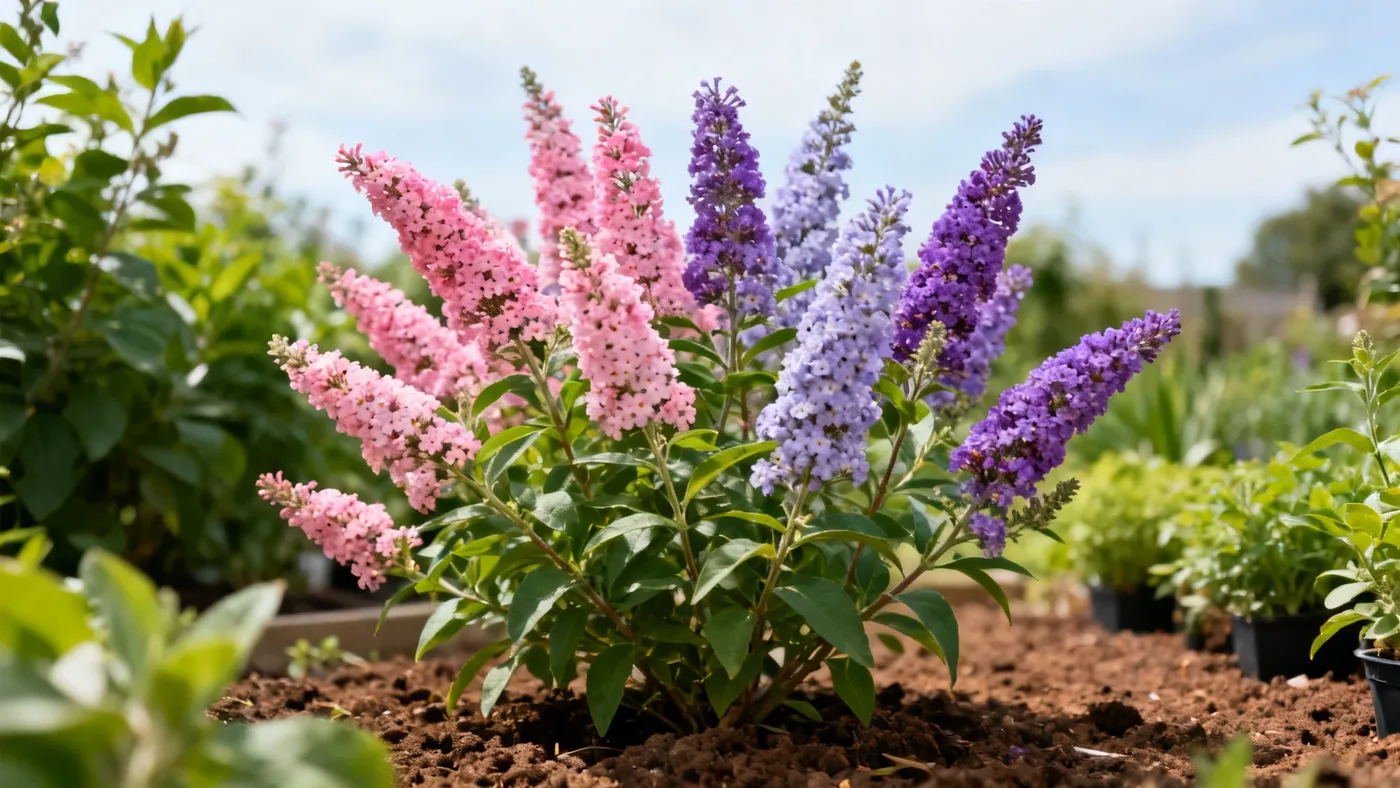
Bicolor Butterfly Bush Care: A Complete Growing Guide
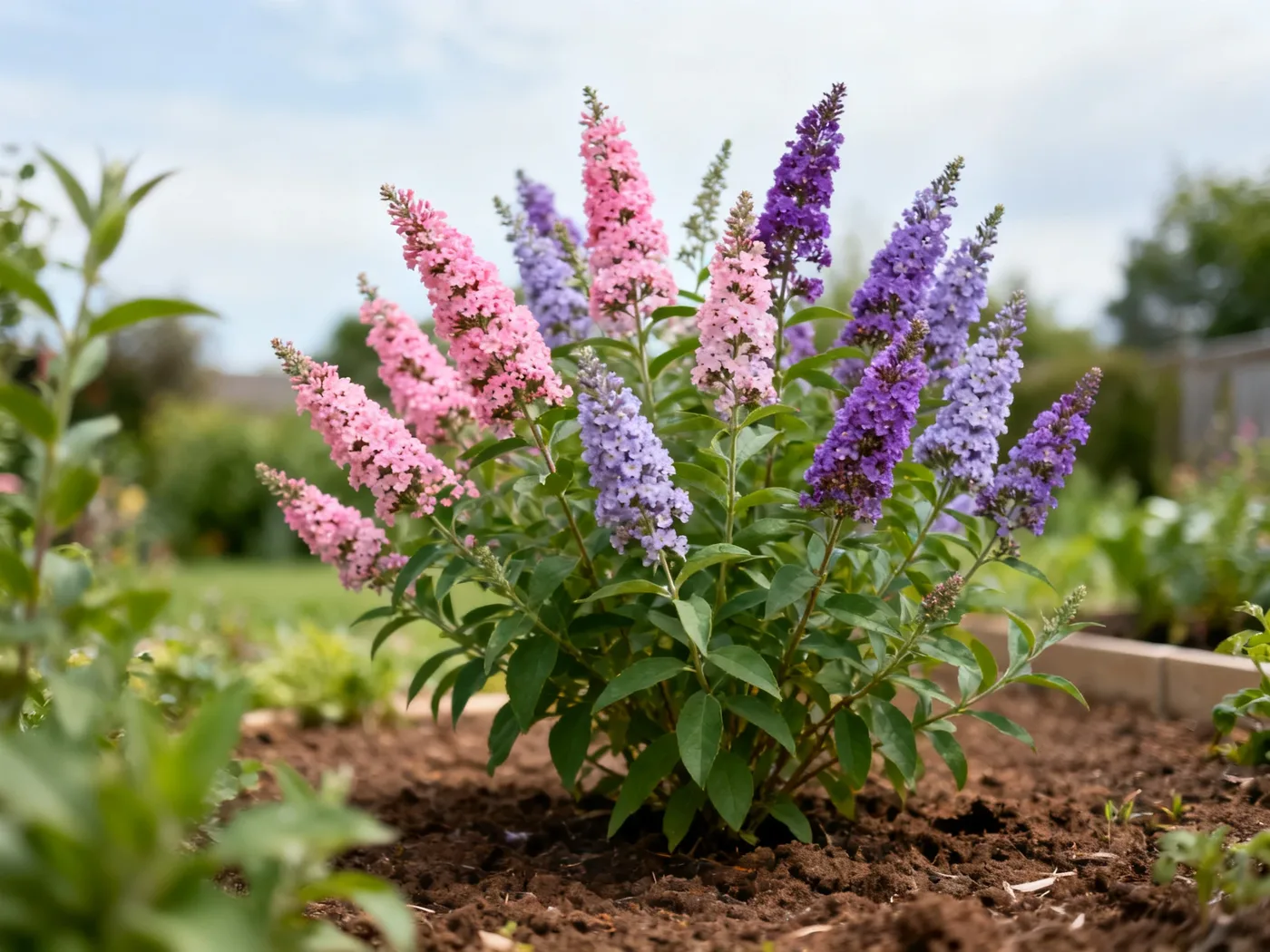
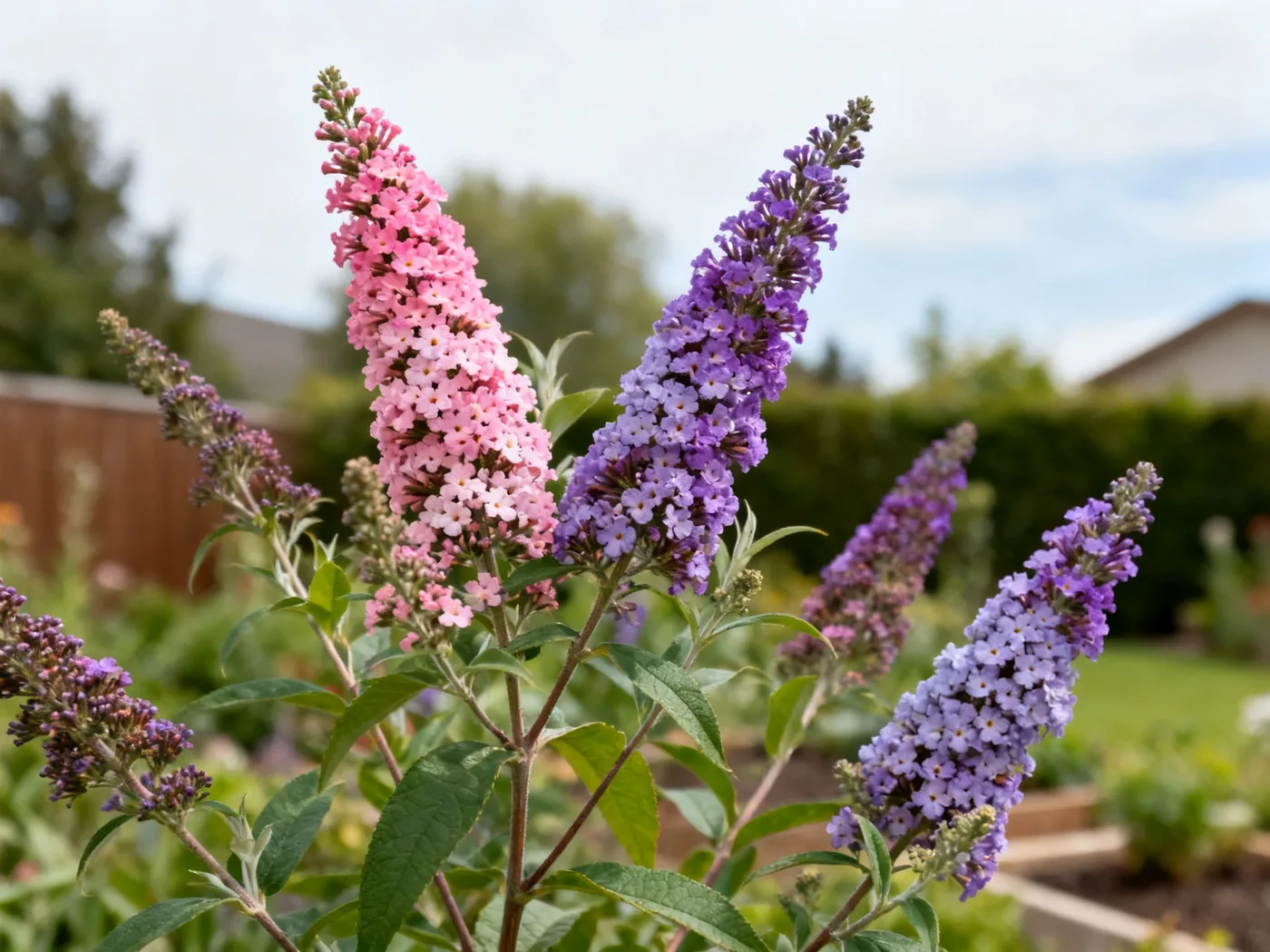
The Bicolor Butterfly Bush (Buddleja davidii, Bicolor form) is a fast-growing deciduous shrub that delivers months of fragrant, two-tone blooms in shades of pink and purple. Whether you're building a pollinator garden or adding seasonal interest to a mixed border, learning how to grow bicolor butterfly bush correctly will reward you with prolific flowers year after year.
Key Takeaways
- Bicolor butterfly bush thrives in full sun (6+ hours) and well-drained soil across USDA zones 5-9
- Hard pruning every spring to 12-18 inches is essential for strong growth and abundant blooms
- Established plants are drought tolerant; overwatering is the most common cause of failure
- Deadheading spent flower spikes through summer encourages continuous rebloom until frost
- The plant matures to 5-8 feet tall and 4-6 feet wide in 2-3 growing seasons
Table of Contents
- Getting Started: Planting Your Bicolor Butterfly Bush
- Essential Care Requirements
- Pruning for Maximum Blooms
- Seasonal Feeding and Maintenance
- Container Growing
- Managing Pests and Diseases
- Quick Reference Guide
Getting Started: Planting Your Bicolor Butterfly Bush
When to Plant
Spring after your last frost date is the best time to plant bicolor butterfly bush. This gives the shrub the full growing season to establish a strong root system before winter arrives. In warmer regions, zones 7-9, fall planting is also possible, but spring is safer for zone 5-6 gardeners, where the shrub may die back to the ground during winter.
Most nurseries sell bicolor butterfly bush in quart or one-gallon containers. A plant started from a quart container will bloom its first year, though flowering increases in subsequent seasons as the plant matures.
Choosing the Right Location
Site selection is critical for bicolor butterfly bush care. This shrub demands full sun, meaning 6 or more hours of direct sunlight daily. Blooms and overall habit decline noticeably in part shade, so planting under tall trees or on the north side of a building will disappoint you.
Choose a spot with good air circulation. This helps prevent powdery mildew in humid climates and keeps the plant vigorous.
Soil Preparation
Bicolor butterfly bush grows in average garden soil, but well-drained conditions are non-negotiable. The plant tolerates poor, sandy, or lean soils, but struggles in heavy clay or wet, poorly drained soil, where root rot develops quickly.
Check your soil pH with a simple test kit. The ideal range is 6.0 to 7.5. If your soil is heavy clay, amend the planting hole with 25 to 30 percent compost or aged bark to improve drainage. Mix compost into the top 8 to 10 inches of soil.
Planting Steps
- Dig a hole about as deep as the root ball and 1.5 times as wide.
- Loosen the root ball gently with your fingers before setting it in the hole.
- Fill the hole halfway with native soil mixed with compost (if needed for drainage).
- Water thoroughly to settle the soil.
- Fill the hole completely and water again.
- Space plants 4 to 6 feet apart to allow for mature width.
- Apply 2 inches of mulch around the base, keeping it 3 inches away from the stem.
Water deeply after planting. For the first growing season, keep soil consistently moist (not waterlogged) during hot spells.
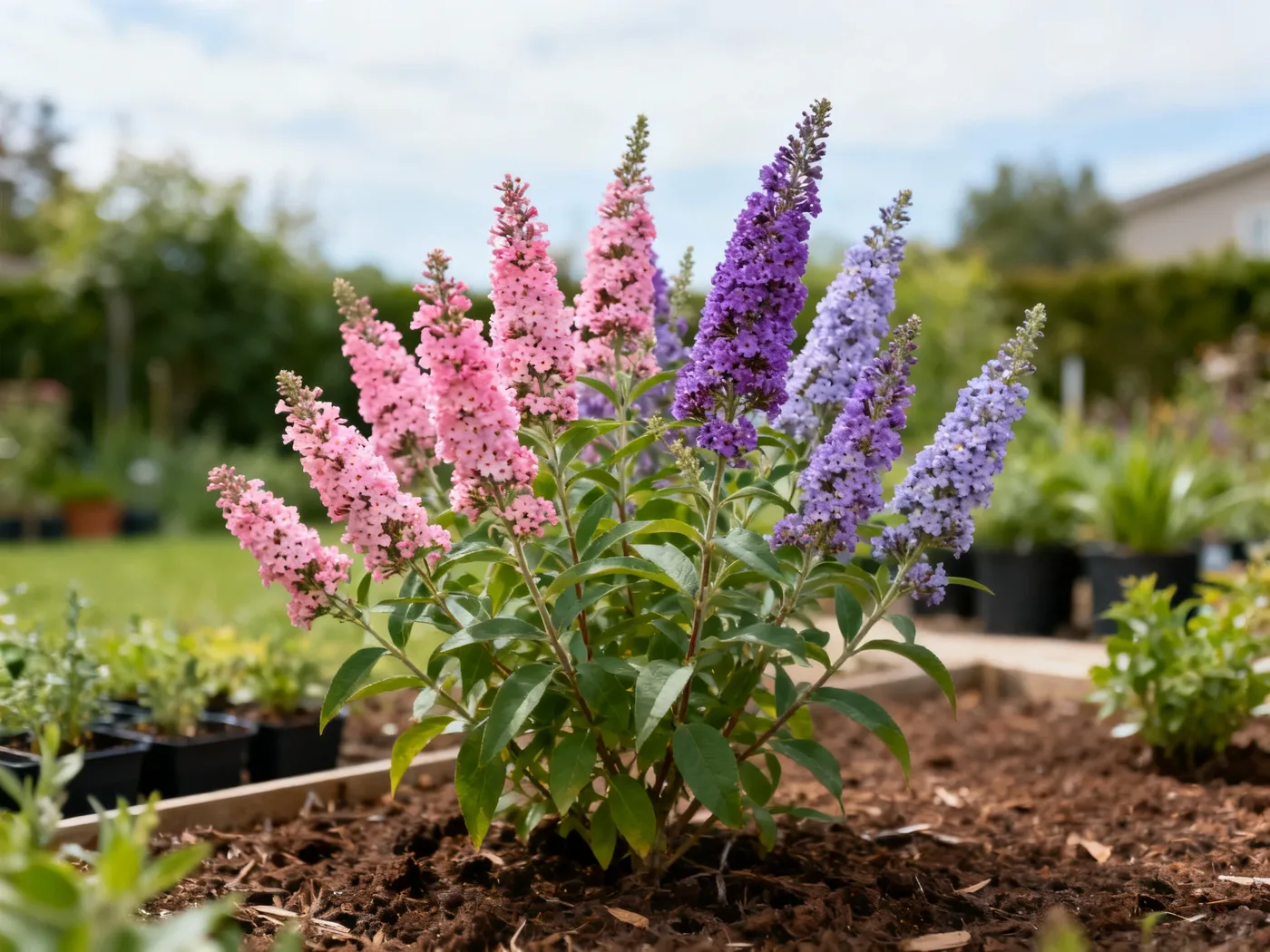
Essential Care Requirements
Sunlight Needs
Full sun is non-negotiable for how to grow bicolor butterfly bush successfully. The plant flowers continuously from early summer through fall, typically June through September or October, only with at least 6 hours of direct sun. In shadier spots, you get fewer blooms, sparse foliage, and a looser, awkward habit.
Watering
At planting time, water moderately and regularly for the first few weeks to help roots establish. After the first full growing season, bicolor butterfly bush becomes remarkably drought tolerant and needs supplemental water only during extended dry spells lasting more than three weeks without rain.
Once established, the plant rarely needs additional watering in temperate climates. In fact, overwatering is a common mistake that kills more plants than drought. Standing water or soggy soil invites root rot and fungal problems. The plant's silvery-gray foliage is an adaptation to dry conditions; it signals the species' true preference for lean, dry sites.
During container growing, watering frequency increases because pots dry faster than garden soil. Check the top inch of soil; if it feels dry, water deeply.
Soil Standards
Average, well-drained garden soil is ideal. The plant tolerates infertile or poor soil, which actually keeps it from becoming overly leggy. Heavy clay or compacted soil must be amended with 25 to 30 percent compost before planting.
Maintain soil pH between 6.0 and 7.5. Most garden soils fall within this range naturally, but if your soil is very acidic (below 6.0), add lime according to a soil test. If it's alkaline (above 7.5), add sulfur.
Pruning for Maximum Blooms
The most important step in bicolor butterfly bush care is hard pruning every spring. This shrub flowers on new wood, so last year's growth will not bloom as vigorously. Without pruning, plants become leggy, bare at the base, and produce fewer flowers. Pruning is the difference between a sparse shrub and a full, heavily blooming specimen.
Spring Pruning Technique
In late winter or very early spring, before new growth emerges, cut the shrub back hard. Reduce stems to 12 to 18 inches above the ground, or trim back to a low framework of woody stems if the plant is very large. This sounds severe, but it is essential. By midsummer, new shoots will reach 2 to 3 feet tall and be covered with flower buds.
Use sharp bypass pruners for stems up to three-quarters of an inch thick, and a pruning saw for thicker wood. Make clean cuts at a 45-degree angle, about one-quarter inch above an outward-facing bud. Never leave stubs, which attract pests and disease.
Summer Deadheading
Deadheading spent flower spikes throughout summer encourages continuous rebloom. As soon as a flower spike fades, cut it off just below the flower head with a sharp pruner. This removes the seed source and signals the plant to produce more blooms. Deadheading can extend flowering until the first hard frost.
Deadheading also reduces self-seeding. The parent species Buddleja davidii is invasive in parts of the Pacific Northwest and UK due to prolific seed production. Even though this bicolor form's seed-set status is not confirmed, deadheading is a safe, responsible practice that any gardener can adopt.
Seasonal Feeding and Maintenance
Fertilizing
Bicolor butterfly bush does not need heavy feeding. A light application of balanced fertilizer in spring (such as 10-10-10) is sufficient. Over-fertilizing promotes leggy growth at the expense of flowers. Nitrogen is the worst offender; high-nitrogen fertilizers will give you a tall, lanky plant with few blooms.
Apply the fertilizer according to label directions after new growth begins, typically in mid-spring. Water thoroughly after fertilizing. If your soil is naturally rich or you have added compost at planting, you may skip fertilizing entirely.
Winter Care
In zones 5-6, bicolor butterfly bush often dies back to the ground after a hard freeze. This is normal. The plant regrows from the woody base as a herbaceous perennial, flowering the same season. Mulch around the base with 3 to 4 inches of compost or bark after the ground freezes to insulate the roots and protect regrowth buds.
In zones 7-9, the shrub is more likely to survive winter as a woody shrub. In very cold snaps, mulch protects tender growth.
Do not remove old growth until late winter, just before pruning. Dead stems provide some winter protection and structure.
Lifespan and Replacement
Bicolor butterfly bush typically performs vigorously for 10 to 15 years. After that, plants decline and produce fewer blooms. Many gardeners replace plants at this point, though hard renovation pruning can rejuvenate an older shrub for another season or two.
Container Growing
Bicolor butterfly bush is suitable for large containers, making it useful for patios and small gardens where in-ground planting is not possible. Use a pot at least 15 gallons (roughly 18 inches in diameter and depth). A pot smaller than this will dry too quickly and stress the plant.
Fill the container with high-quality potting mix, not garden soil. Position the pot in full sun. Water more frequently than in-ground plants, since containers dry faster. Check soil moisture 2 to 3 times weekly during the growing season, especially in summer heat.
In zones 5-6, move the container to a sheltered location or unheated garage before the first hard frost, or mulch heavily and hope for survival. In zones 7-9, containers can stay outside year-round, though they will need winter protection from extreme cold.
Fertilize container plants every 2 to 3 weeks during the growing season, since regular watering leaches nutrients from potting mix quickly. Prune container specimens the same way as in-ground plants: hard cutting in early spring and deadheading through summer.
Managing Pests and Diseases
Common Pests
Spider mites and aphids occasionally attack bicolor butterfly bush, especially in hot, dry conditions. Spider mites cause yellowing and stippling on leaves. Aphids cluster on new growth and can distort leaves and stems.
For spider mites, blast the foliage with a strong stream of water from the hose every few days. This knocks mites off and raises humidity, which they dislike. If infestations persist, apply neem oil or insecticidal soap every 7 to 10 days until controlled.
For aphids, a strong spray of water often suffices. If not, treat with insecticidal soap. Avoid broad-spectrum insecticides, which kill beneficial insects like butterflies and bees that are the whole reason you grew this shrub in the first place.
Root-knot nematodes occasionally appear in sandy or warm-climate soils. Infested plants yellow and decline progressively. Prevention through good sanitation and crop rotation is more effective than treatment. If nematodes are suspected, consult your local extension service for diagnosis and options.
Diseases
Root rot develops in wet, poorly drained soil. Once established, it is difficult to reverse. Prevention is key: ensure soil drains well and avoid overwatering. If root rot occurs, the plant often must be removed and the area replanted with better-drained soil mixed with compost.
Powdery mildew appears as a white coating on leaves in humid, crowded conditions with poor air circulation. Space plants adequately and avoid wetting foliage when watering. If mildew develops, prune out affected growth and improve air flow by removing lower branches. Sulfur dust or neem oil sprayed early in the morning can help, but prevention through good site selection is easier and more effective.
Quick Reference Guide
| Care Element | Requirement |
|---|---|
| Hardiness | USDA zones 5-9 |
| Mature Size | 5-8 ft tall, 4-6 ft wide |
| Growth Rate | 2-3 ft of new growth per year |
| Sunlight | Full sun (6+ hours daily) |
| Soil | Average, well-drained; pH 6.0-7.5 |
| Water | Moderate at planting; drought tolerant when established |
| Spacing | 4-6 ft apart |
| Spring Pruning | Cut back to 12-18 in. before new growth emerges |
| Summer Deadheading | Remove spent spikes to encourage rebloom |
| Bloom Time | June through September or October |
| Blooms Per Year | First year from container; full maturity in 2-3 seasons |
| Fragrance | Sweet, honey-like scent |
| Wildlife Value | Highly attractive to butterflies, bees, hummingbirds |
| Deer Resistant | Good resistance |
| Container Suitable | Yes, 15+ gal minimum |
| Lifespan | 10-15 years of vigorous performance |
| Toxicity | Not toxic to pets or people |