Does Bicolor Butterfly Bush Bloom on Old or New Wood?
If you just cut your Bicolor down to a few stubs and now you're worried you took off this summer's flowers, take a breath. You almost certainly did not. The bush has plenty of ways to come back, and we'll show you why.
The common belief is that every butterfly bush flowers only on new growth, and that is what we see in our rows too. Pruning timing matters, and we prune in early spring, because hard pruning then encourages large flowers. Bicolor has a hybrid in its background, and it doesn't behave quite like the solid-color cultivars that most pruning advice is written for.
This guide covers everything you need to know about how Bicolor makes its flowers, from how its buds form and what old and new wood mean on this shrub to when to cut in spring and how to trim after the first flush.
How a Weyeriana Hybrid Builds Its Flowers
Pruning advice only makes sense once you know how the shrub is put together. Bicolor's flowering habit comes from its parentage, and that explains nearly everything about how it reacts to a pair of loppers.
Two Parents, Two Habits
Here is the short version of the family tree, because it is where the old-wood trait comes from.
Buddleja x weyeriana is an artificial cross between B. davidii and B. globosa, and Bicolor carries that weyeriana background. A straight davidii sends up long stems each season and puts its flower spikes on the tips of that fresh growth. The hybrid blends two habits instead of one.
In practice, one Bicolor stem can do two jobs. A stem that came through winter can send out side shoots that carry flowers, usually a bit earlier in the season. Meanwhile, brand-new stems from the base or from your pruning cuts grow fast and flower later.
Roots That Restart the Plant
Underneath the stems sits a root system that keeps the shrub going no matter what happens above ground, and that matters most in cold regions.
The hybrid is not as winter hardy as other buddlejas and may die back to the roots in zones 5b or 6. When that happens, the roots push up fresh stems in spring and those stems carry the whole summer's flowers. At the colder end of Bicolor's range, winter has often done the pruning before you pick up the shears. Our winter care guide covers how to help it through.
Old Wood and New Wood on Bicolor Butterfly Bush
These two terms get tossed around as if everyone knows them. Here is what they mean on a Bicolor, and where each one carries flowers.
What Counts as Old Wood
Old wood is any stem that grew last season or earlier and is still alive. It is stiffer than the rest of the plant and usually has darker, rougher or peeling bark. On Bicolor, that wood can carry side shoots with flower buds, so those gray sticks in March are not dead weight.
Customers usually ask us in early spring whether those bare stems are dead. Scratch a little bark with a thumbnail. Green underneath means alive, and a living stem is old wood that can still flower for you.
What Counts as New Wood
New wood is everything that grows this year. It starts as soft green shoots from the base of the plant or from just below where you cut, and it hardens a little as summer goes on. These shoots grow quickly and carry the later flowers.
The species puts it plainly: flowers appear on new growth, so pruning timing matters. Prune in early spring, because hard pruning then encourages large flowers. It doesn't mean every cut gives identical results, as the next sections explain, but it does mean the bush has a second chance built in. For the full bloom calendar, see our guide to Bicolor blooms, colors and timing.
Why Bicolor Butterfly Bush Flowers on Both
The contrast with a standard butterfly bush is the whole reason this guide exists, so it is worth laying the two habits side by side.
The Straight Davidii Rule
A plain davidii cultivar has one rule. Flowers appear on new growth, so the best time to prune is early spring, which controls growth and encourages large flower production. Cut it low, let it rebuild, and every spike comes from that rebuilt growth. That is why the standard advice is to cut hard, and for those plants it is sound.
A solid-color cultivar such as Miss Ruby follows that rule closely. If you want to compare the two plants in other ways, our Bicolor and Miss Ruby comparison has the details.
What Bicolor Does Differently
Bicolor flowers on new growth, so pruning timing matters. We prune in early spring, because a hard cut then encourages large flowers on the stems it grows afterward.
That is where we push back on a piece of common advice. "Cut every butterfly bush to the ground" works fine on a straight davidii. On Bicolor it is a choice, not a requirement, and you trade early blooms for a tidier, more uniform plant. Neither choice is wrong. Which one suits you depends on what you want to see in June.
What Happens When You Cut Too Hard
If you've already cut deep, here is what to expect. The news is better than most people fear.
Later First Flowers
A hard cut removes the old stems that would have flowered first. The bush then has to grow brand-new stems and let them mature before they bloom. The first spikes arrive later than they would on a lightly cut plant, and the gap is usually a matter of weeks.
The same thing happens if you prune after growth has already started. You cut off buds that were already on their way, and the plant starts that part over. One of the most common questions we get in late spring is whether a bush cut that late will bloom at all. It will, only later.
Fewer Spikes in the First Season
Because you removed the old-wood layer, the total number of flowering stems is usually lower in the season after a very hard cut. The new stems make up much of the difference, since the plant grows quickly once the weather warms. What you lose is mostly the early bloom, not the late summer.
A hard cut also produces a bush with fewer, taller, more vigorous stems, which can look a little sparse in early summer. By midsummer most people stop noticing. Most buddlejas flower on branches that grow in early summer, which is why even a bush cut very low still has a good chance of blooming well.
Cutting Back Bicolor Butterfly Bush in Early Spring
This is the main cut of the year, and the one to get comfortable with. Our pruning guide covers the basic technique step by step, so here we focus on timing and how low to go for a plant with two flowering habits.
Timing the Cut
Late March to mid-April is the window for hard pruning most buddleja in the UK, but your climate will differ. Check with your local extension service for the right dates where you live. Late winter works well for the hybrid, and the safe signal is the same everywhere: wait until the worst cold has passed and buds on the lower stems begin to swell.
How Low to Go
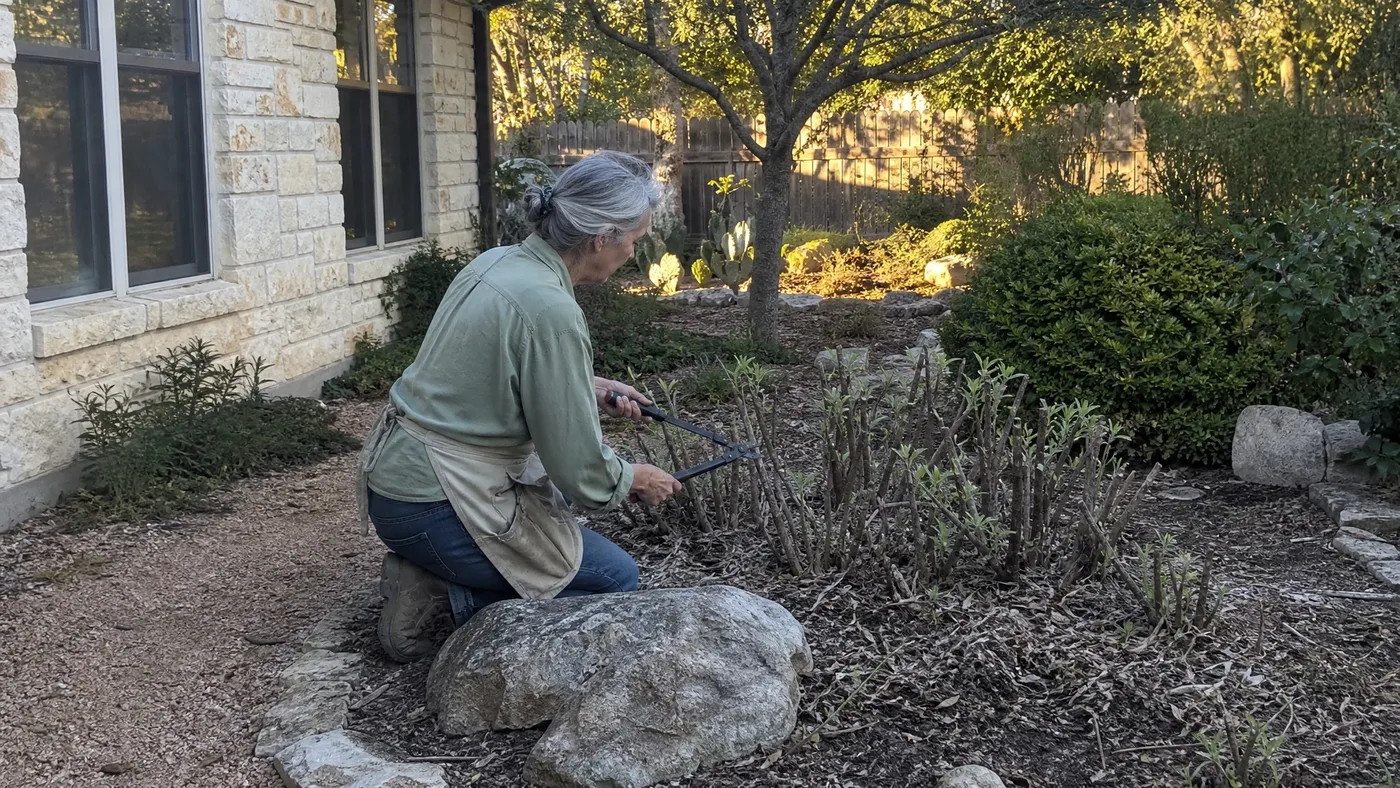
Here is our honest position. Cutting the hybrid back close to the ground in late winter gives better shape, and the species guidance from Oregon State says early spring pruning controls growth and encourages large flowers. If you want a tidy, compact plant and don't mind waiting a little for the first spikes, that works on Bicolor.
Our own choice is to leave a low framework of living stems and cut just above a healthy bud on each one. You keep some old wood for the early flowers, and the new growth fills in around it. If your bush is small or still young, cut more lightly and let it build up.
Cleaning Up the Stems
Remove anything that is brown and brittle all the way through. Take out thin, crossing or damaged stems first, then shorten what remains. If the bush died back in winter, cut to the lowest living growth and let the roots do the rest.
A Gentle Trim After the First Flush
Once the first round of flowers fades, a light trim keeps the bush looking good and gives it a reason to keep blooming. Think of it as a tidy-up, not a second pruning.
Removing Spent Spikes
Snip each faded spike back to the first pair of healthy leaves below it. This stops the plant putting energy into seed and usually encourages new flowering shoots from lower down. The species blooms from June to September, and regular tidying is how you keep Bicolor performing across that window.
Shaping Without Overdoing It
If a branch has grown out of line, shorten it by a modest amount rather than cutting it to the base. Plants flowering on last year's wood are pruned after flowering, usually in early to mid summer, and that is the right spirit for Bicolor too: take off what has finished, and leave the rest.
Fresh spikes also mean more visitors. Butterflies and bees keep coming as long as there is something open, and our guide to Bicolor and its pollinators covers who to expect. A well-timed trim keeps that traffic going into the late season.
Relax, Bicolor Butterfly Bush Forgives Most Haircuts
If you take one thing from this guide, let it be this. Bicolor is a forgiving plant, and almost every pruning mistake can be fixed with a little time.
Cut Too Late or Too Low
A late cut delays the flowers. A very low cut removes the early layer and leaves the late one. In both cases the bush is still alive, still growing and still on its way to blooming. The cure is patience and a bit of rain, not a replacement plant.
Not Sure Whether It's Alive
If you've pruned and see nothing happening, give it a few weeks. Scratch a stem to check for green, and look at the base for new shoots. Bicolor often restarts later than you expect, especially after a cold winter, so don't give up on it too soon.
When to Wait and When to Act
If you aren't sure you cut at the right time, don't cut again. Extra pruning on top of a mistake only sets the bush back. Let it grow, trim the spent spikes later, and make a better plan next spring.
Prune Your Bicolor With a Light Heart
Bicolor flowers on new wood, like straight davidii cultivars, so pruning timing matters. Cut it back hard in early spring, because hard pruning then encourages large flowers, and trim lightly after the first flush to get early blooms and late blooms from one plant.
Bicolor Butterfly Bush
Nursery-grown Bicolor Butterfly Bush in sizes from Quart, shipped to your door.
From $25.33
Shop Now →A late or heavy cut costs you a few weeks, not the season. Our growers watch Bicolor from the first swelling buds in late winter to the last spikes of fall, and we are a small business with our own farms, growing and selling top-quality shrubs we're happy to talk about.