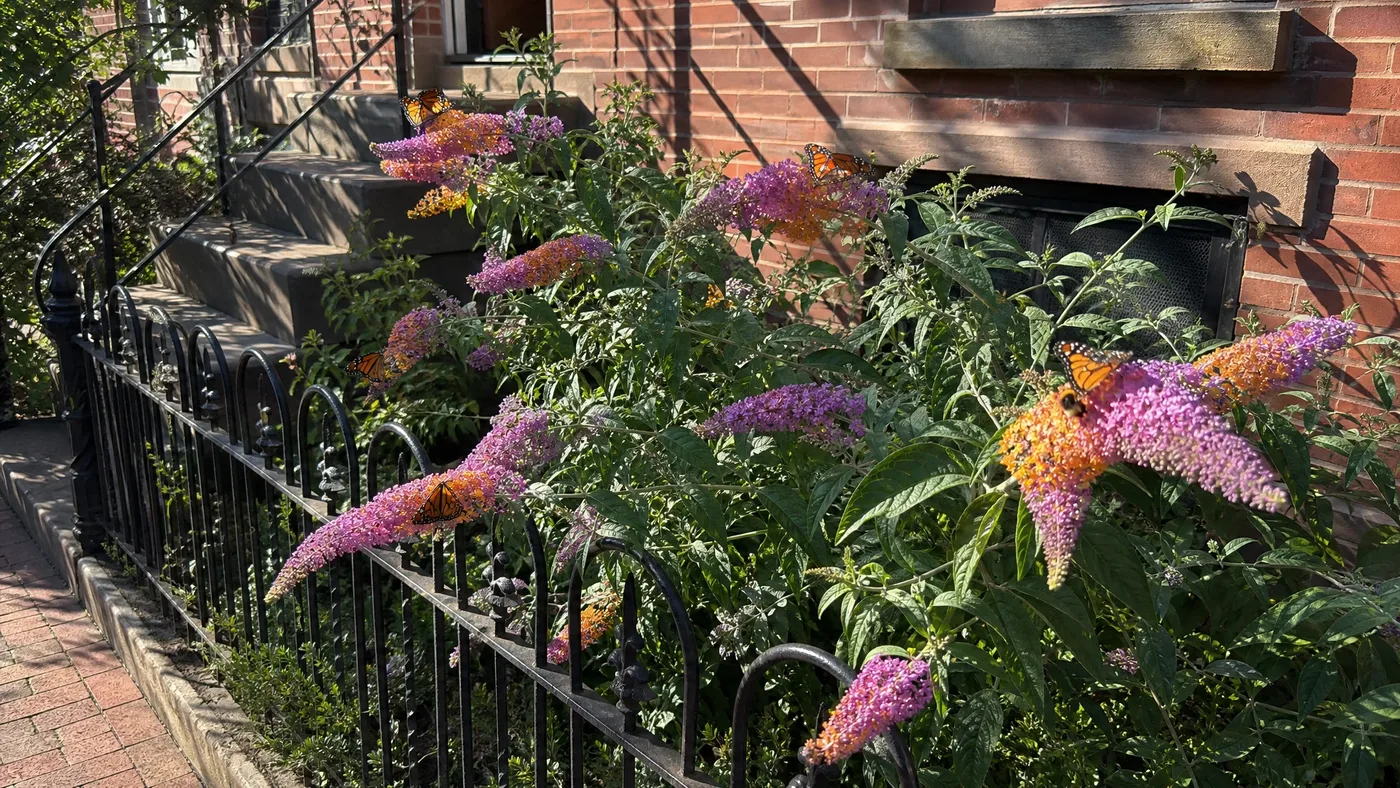
Does Bicolor's Two-Tone Color Attract More Pollinators?
One study. That is how many in our source file compare a butterfly's response to the visual and scent cues of Buddleja davidii, and it tested a single butterfly species. Zero tested a two-tone pattern against a solid color. Each summer, when the first Bicolor spikes open, one of the most common questions we get is whether the color pattern is what brings the visitors.
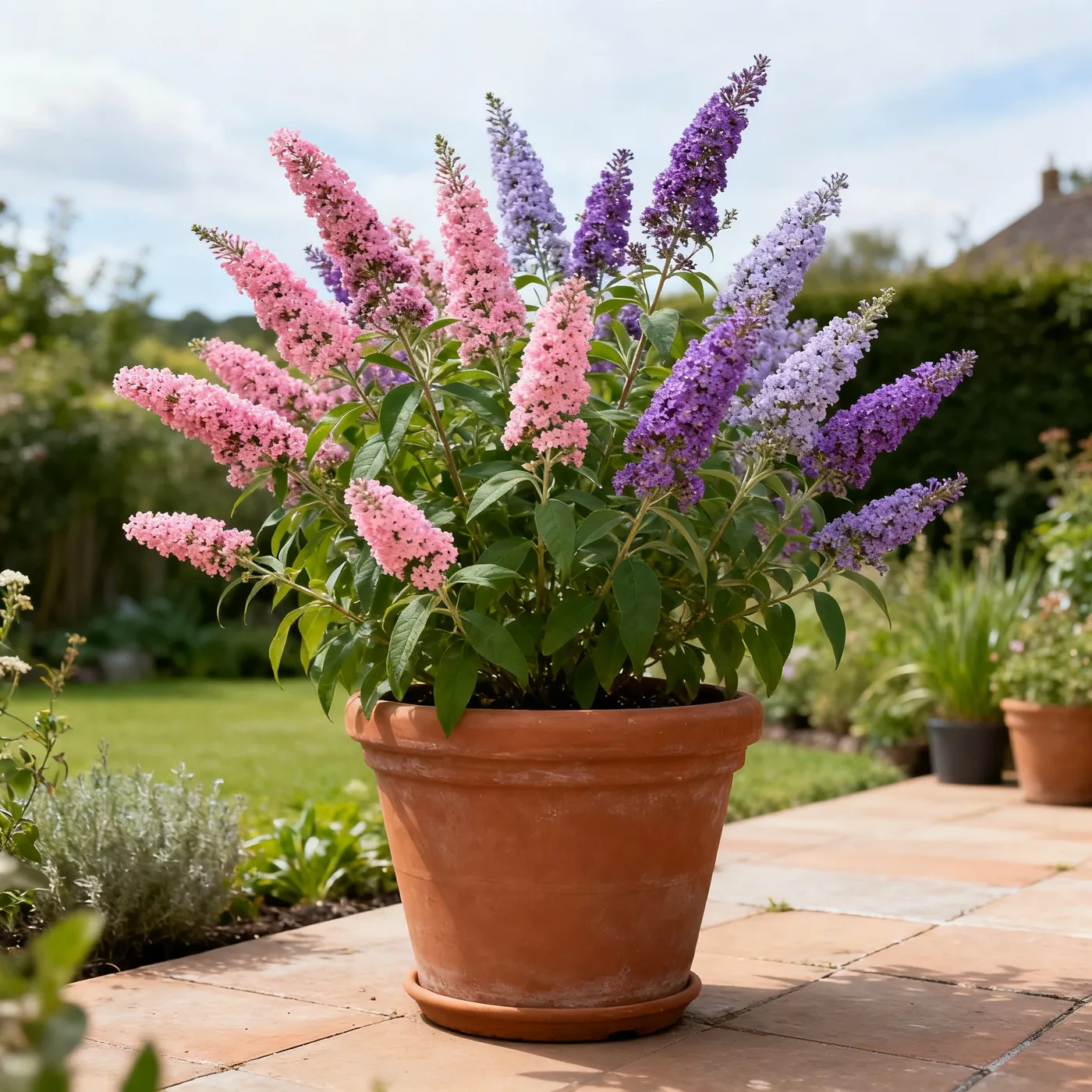
The belief is simple: two colors on one plant must send a stronger signal than one. The evidence neither confirms nor rules that out. What it shows is narrower and more useful.
Below, you'll find out all about how Bicolor's pattern relates to pollinator behavior, including the orange nectar guide, the hummingbird claim, the pink-versus-orange question, the role of scent, and the counts behind each verdict. Get this wrong and you place and buy plants for a signal nobody has measured, while ignoring the traits that actually feed visitors.
Two Colors on Bicolor Butterfly Bush Double the Visitors
This is the claim we hear most. We tested it against what the sources actually measured, and the answer is that nobody has counted.
What the Evidence Covers
The only controlled test in our sources is a lab choice study with peacock butterflies. It compared the visual cues of Buddleja davidii against its scent cues. It did not offer the butterflies a two-tone flower beside a solid one.
"Double the visitors" is a numeric claim. A numeric claim needs a count of visitors on a two-tone plant and a count on a solid plant, taken under the same conditions. We found neither.
The Species Already Carries Two Tones
The species is lilac-colored with an orange throat, so a second color on the flower is not a feature unique to Bicolor. Every plant in the species pairs a main color with an orange center.
What Bicolor adds is a different balance of those tones across the cluster. Whether that balance changes who visits is untested. Treat it as a design feature you can enjoy, not a pollinator upgrade you can count on.
What a Fair Test Would Need
Here is the design that would settle it. We list it so you can judge any claim you read, including ours.
Two plants, one two-tone and one solid, in the same bed with the same sun. Spikes of the same age. Counts taken at the same hour for the same number of minutes, repeated over many days and weather types. Without all of that, a higher count on one plant may only reflect where it stands or how many spikes were open.
Verdict: unproven. Buy Bicolor because you like how it looks. Do not expect twice the traffic.
Is the Orange Eye a Nectar Guide?
Here the sources give a real answer, though a limited one. The orange is documented as a nectar guide on the species, and the lab results tell us how much weight to give it.
What the Orange Does
The peacock butterfly study describes the flowers as typically purple or lilac, with an orange nectar guide and a strong, pleasant scent. A nectar guide is a contrasting mark that points a visitor toward the reward. On a butterfly bush that reward sits in the throat of each small floret.
The orange is therefore a working part of the flower, not decoration. It belongs to the species, which means Bicolor inherits it rather than inventing it.
What the Lab Test Adds
The same study found that feeding behavior was elicited only by scent cues, not by visual ones. A guide helps a visitor orient. Scent started the feeding in the test.
The orange eye may help a butterfly that has already arrived, but the sources do not show it pulling visitors in or starting them feeding. They also do not measure whether Bicolor's orange is larger or more contrasting than the species'. On more orange meaning more nectar access, there is no data either way.
Check the Eye on Your Own Plant
Look at a few open florets in good light. Note whether the orange sits in the throat of every floret or only in some, and whether it fades as the flowers age. Older florets at the base of a spike open first, so one spike shows several ages at once.
That is a cheap observation, and it tells you more about your own cultivar than any general description can.
Verdict: true as a guide, overstated as a draw.
Would Hummingbirds Pick Bicolor Butterfly Bush First?
Hummingbirds are on every wish list, so this claim gets repeated often. The sources support the visit, not the ranking.
What Is Documented
The peacock butterfly study lists the visitors beyond butterflies as moths, wasps, beetles and hummingbirds. Butterflies, hummingbirds and other pollinators are also attracted to the rich nectar. So hummingbirds do come to Buddleja davidii.
Neither source says hummingbirds come first, come more often to a two-tone flower, or favor one color section over another. Both name nectar as the draw.
Where the Common Advice Goes Wrong
Plenty of gardening advice says to plant red or orange for hummingbirds. We would not build a Bicolor planting on that. The sources point to nectar supply, and Bicolor offers it across a bloom window of June to September, about four months.
The study's visitor list is also longer than most people expect. If you spot a small visitor on a spike, wasps and beetles are on the same list, so confirm what it is before you credit the color.
Plant for the Window, Not the Hue
If hummingbirds matter to you, plant for the whole window and a steady nectar flow. Give the plant full sun, at least 6 hours a day, so it makes the most flower it can.
Our guide to Bicolor and its pollinators covers who else shows up and when.
Verdict: they visit, and nothing shows they pick Bicolor first.
Butterflies Prefer Pink on Bicolor Butterfly Bush
This belief assumes butterflies read the two sections of the flower separately and favor one. We looked for any source that splits them.
No Source Splits the Colors
The species is lilac with an orange throat. The one cultivar page we cite, for 'Attraction', lists purple/lavender and red/burgundy. That is a different cultivar from Bicolor, and neither page mentions pink or tests one color section against another.
The study's findings compare visual cues as a group with scent. They are not reported as one color against another. So a claim that butterflies prefer the pink sections has no support in our sources, and a claim that they prefer the orange has none either. Our bloom guide covers how the colors read through the season.
Why Color Names Drift
Color labels for two-tone butterfly bushes vary from source to source. One calls a flower rose, another calls it lavender, and light and age shift the look of the same spike.
That makes "they prefer pink" hard to test even in principle. Before you compare sections, decide what counts as pink on your plant, and write it down.
Run Your Own Count
You can test this on your own plant in a week. Pick the same hour each day. Watch a pink-dominant spike and an orange-dominant spike for the same length of time, and note what lands on each.
Do it in full sun and on spikes of similar age, because age and light change what a spike offers. If the counts split clearly, you have learned something no source has. If they do not, you have your answer.
One practical point on placement: put the plant where you will see it from a window or a path. That is a viewing decision, and our landscape design ideas cover it. The butterflies do not need you to rotate the plant.
Verdict: unsupported.
Scent Gets Overlooked While Color Takes Credit
This is the one belief where the sources point firmly one way. Scent and nectar carry more weight than color, and the lab numbers show it.
The Peacock Butterfly Test
In the lab choice study, scent cues were more than three times as attractive to peacock butterflies as visual cues. Feeding was elicited only by scent. The most effective compounds were 4-oxoisophorone and oxoisophorone epoxide.
The authors still conclude that visual cues matter. Their wording is that the attractiveness comes from the plant's visual cues, but more importantly its olfactory cues. Color has a role. It is the smaller one.
Nectar and Fragrance Together
The blossoms are honey-scented and the plant is a rich nectar source. Those two traits are what visitors respond to once they are close. Native butterfly caterpillars cannot feed on the leaves, so adult visits are about nectar and nothing else.
The Limit of One Species
The study used the species, and Bicolor is a cultivar of it. We expect the scent to carry over, but nobody has measured Bicolor's scent against the species' in a lab. One butterfly species was tested, so bees, moths and hummingbirds may weigh scent differently.
What to Do With This
Put the plant where you will walk past it. A honey-like fragrance only counts for you if you are near enough to notice it, and it is a good reason to place Bicolor beside a path or seating.
Then protect the nectar supply. Flowers form on new growth, so a hard cut in early spring sets the season, and full sun keeps the spikes coming.
Verdict: scent outweighs color in the one test we have.
What the Counts Say About Bicolor Butterfly Bush
Numbers settle arguments faster than adjectives. This table lists every figure our sources give on the question, including the zeros.
| Measure | Count |
|---|---|
| Studies comparing visual and scent cues | 1 |
| Butterfly species tested in that study | 1 (peacock butterfly) |
| Tests of a two-tone flower against a solid one | 0 |
| Tests of pink sections against orange sections | 0 |
| Scent attractiveness compared with visual cues | More than 3 times |
| Visitor groups documented | 5 (butterflies, moths, wasps, beetles, hummingbirds) |
| Bloom window for the species | June to September |
Reading the Zeros
A zero here means nobody tested it. It does not mean the two-tone pattern has no effect. It means we cannot claim one.
The two numbers that are not zero point the same way. Scent is more than three times as attractive as sight in the single test we have, and the plant draws five groups of visitors across a bloom window of about four months. Both favor nectar supply and scent over pattern.
Verdicts in One Place
This second table sets each belief beside what backs it.
| Belief | Verdict | Basis |
|---|---|---|
| Two colors double the visitors | Unproven | 0 two-tone versus solid tests |
| The orange eye is a nectar guide | True, limited | Described on the species, but feeding began with scent |
| Hummingbirds pick Bicolor first | Unsupported | Visits documented, no ranking |
| Butterflies prefer pink | Unsupported | 0 color-section tests |
| Scent matters more than color | Supported | More than 3 times in 1 study |
Until someone counts visitors on two-tone and solid plants side by side, the honest position is that Bicolor's pattern is unmeasured. We would rather tell you that than guess.
Plant for Nectar Volume, Not Pattern
Count on scent, nectar and a long bloom window, and ignore claims that the pink-and-orange pattern doubles visitors, that hummingbirds pick it first or that one color section is the lure. To maximize nectar, prune in early spring, because flowers are borne on new growth, and follow our pruning guide for the cuts.
Bicolor Butterfly Bush
Nursery-grown Bicolor Butterfly Bush in sizes from Quart, shipped to your door.
From $25.33
Shop Now →The one rule to hold is a number: give Bicolor 6 or more hours of direct sun a day, as our sun guide explains. As a small grower with our own farms, we grow and sell top-quality butterfly bushes, and we would rather give you a number that works than a color story nobody has tested.