Why Is My Bicolor Butterfly Bush Not Showing Both Colors?
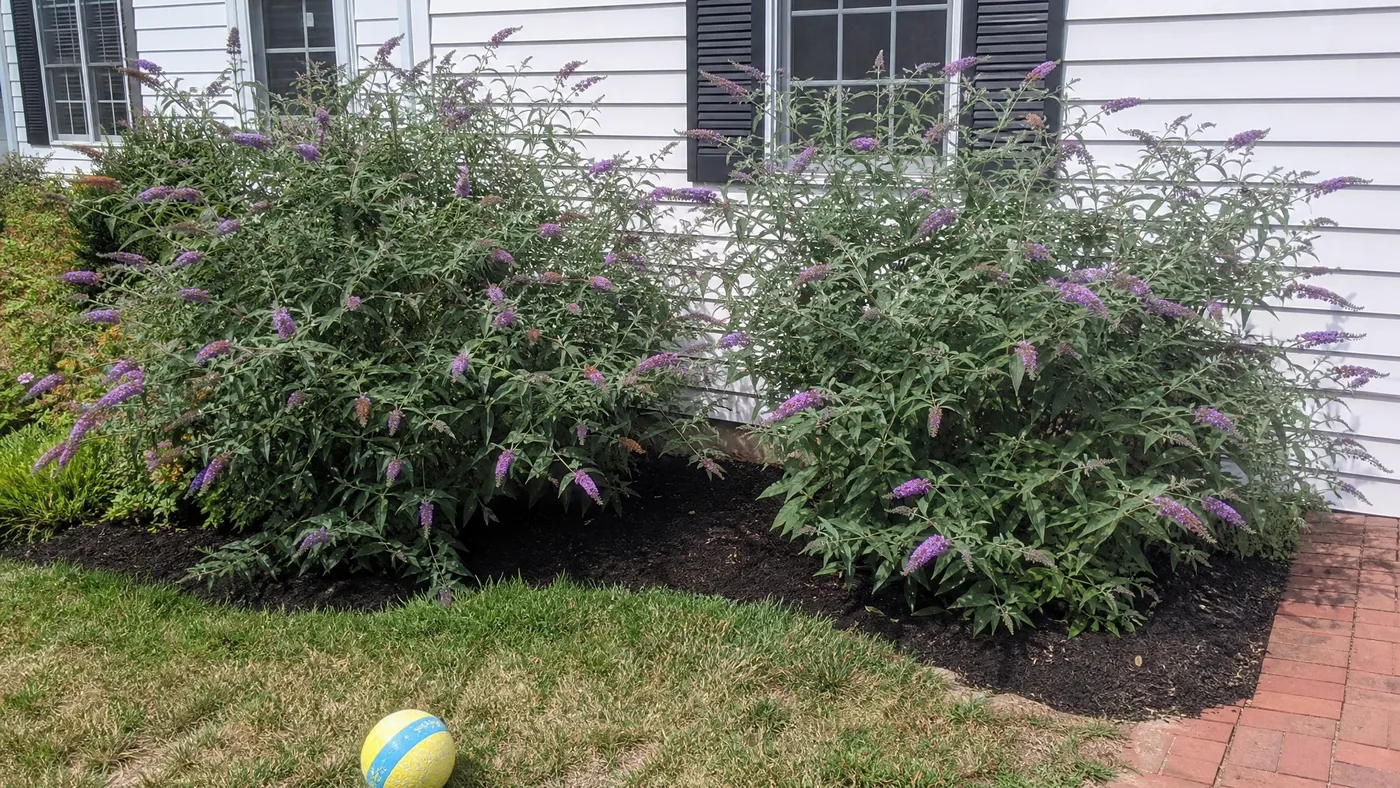
It is mid-July and you are walking the border with a coffee. One Bicolor is solid orange from top to bottom. The plant next to it is all lilac. Both came off the same tag, and neither looks like the two-tone spikes in the photo. That is a problem with a cause, and most of the time you can do something about it.
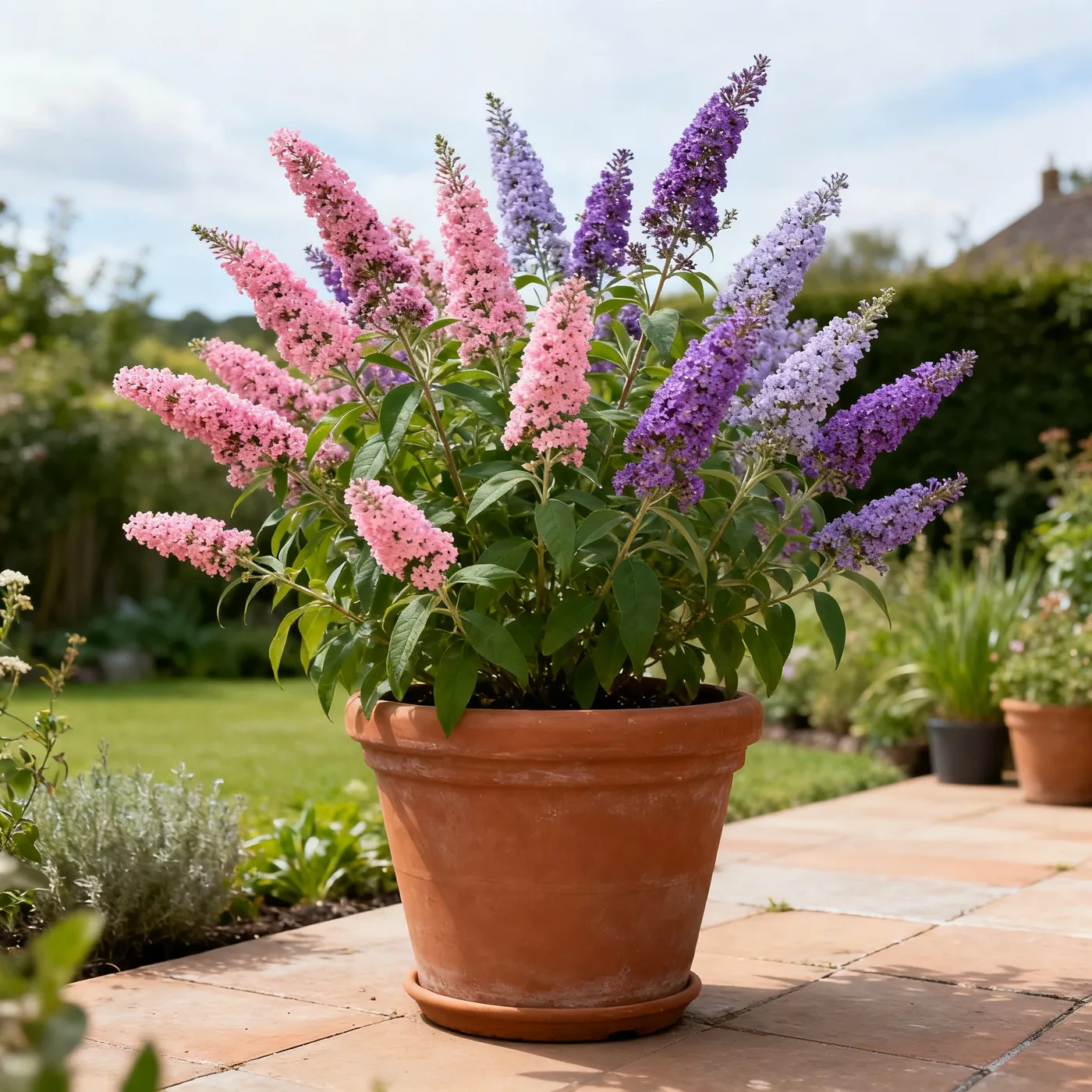
Bicolor is a seed-grown strain, not one cloned plant, so no two plants are guaranteed to bloom alike. Handled badly, that means you rip out plants that are fine or keep seedlings that will never give you what you wanted. In this article, we'll go through the all-orange plant, the all-lilac plant, muddy color, and the single odd branch, then the seed-strain reasons behind all of it.
Your Bicolor Butterfly Bush Blooms Solid Orange
An all-orange plant is the symptom we hear about most, and the fix starts with looking closely before you blame anything. Work through the checks below in order.
Check the Individual Florets
Color reads differently from across the yard than it does up close, so get your face into the spike first.
Look at single florets, not the whole panicle. The species itself is lilac-colored with an orange throat, so orange in the center of a flower is normal and does not mean the plant has failed. Then check spikes on several different branches, and check them again a week later. The plant blooms from June to September, and a single spike can look different at the start of its opening than at the end.
One of the most common questions we get is whether an all-orange plant is sick. It is not. A sick plant looks wilted or spotted, and an orange one just looks orange.
Trace It to the Seed Strain
If every spike on every branch stays orange across a couple of weeks, you have a plant that leaned toward one side of its parentage.
Bicolor is an open-pollinated hybrid seed strain, and each seedling gets its own shuffle of the orange and lilac sides. Some plants carry a lot of orange and very little lilac. Nothing you did caused it, and no fertilizer, new spot or watering change will turn it two-tone. Skip the fixes you read about for fading and save your effort for the decision below.
Decide What to Do With It
You have three honest options, and none of them involves waiting for the plant to change its mind.
Keep it as the warm accent it is, ideally with a lilac plant beside it so the pair gives you the contrast one plant will not. Replace it with a plant you have seen in bloom. Or do not propagate it for two-tone color, because cuttings from a plant carry that plant's traits, and a cutting from an orange plant gives you another orange plant.
Only Lilac Spikes Show Up Every July
The all-lilac plant has a different usual suspect than the orange one, and it is often not the plant you bought.
Why Lilac Takes Over
Lilac is the plain species look, so a plant that loses the mix tends to land there. Seedlings are the main route.
This shrub self-seeds and naturalizes easily, with as many as 40,000 seeds on a single panicle. Seeds that do not sprout right away stay viable in the soil for three to five years. A lilac plant you never remember buying may well be a seedling from a spike you let go brown two or three summers back.
What to Check First
Before you judge the plant, establish where it came from. These checks take ten minutes.
- Decide whether you planted it or it arrived on its own. A plant that popped up beside an older shrub, in a gravel edge or a crack, is a seedling.
- Think back to whether the older plants went to seed in past years. If they did, assume seedlings are scattered around them.
- Compare the lilac plant's habit to your purchased plants. Seedlings often grow at their own pace and do not match the planted ones.
- Check the sun. A plant in poor light can look flat and one-note even when its genetics are fine, which we cover in the next section.
Stop the Next Round
Seedlings are easier to prevent than to pull. Deadhead and remove flower clusters before seed disperses, which also extends bloom.
Cut spent spikes, dig out young seedlings while the roots are small, and keep an eye on the ground near old plants for years afterward. The same source considers the species invasive in some states, so check with your local extension service before you let any seedling stay.
Flowers Open Muddy Instead of Two-Tone
Muddy or blurry color is the hardest symptom to read, because heat, age and light can all fake a genetic problem. Rule those out before you decide the plant is a dud.
This table pairs what you see with its likely cause and a test you can run in the yard.
| What you see | Likely cause | How to test it |
|---|---|---|
| Faded color on hot afternoons that looks fine at sunrise | Heat on open flowers | Look at fresh spikes in the morning |
| Old florets at the base of the spike look dull while new ones at the tip look sharp | Flower age | Compare the two ends of one spike |
| Small spikes, loose habit, flat color all over | Too little light | Count the hours of direct sun |
| Fresh morning spikes in full sun still blend into one tone | Genetics | Repeat the check next summer |
Rule Out Light First
Light is the cause you can fix this season, so start there.
Full sun means six or more hours of direct sunlight a day. For 'Attraction', in part sun the plant becomes weedy with diminished flowering. A shaded plant gives you fewer, weaker spikes, and weak spikes never show you what the strain can do. Our sun requirements guide covers how to measure your site.
Then Judge Heat and Age
Once light is settled, look at the flowers themselves, because they age fast in summer weather.
Judge color on freshly opened florets in the morning, not on whatever is left after a hot week. Deadhead the oldest spikes so new ones take over. If a young plant is only in its first season, hold your verdict until the next summer. If morning spikes in full sun still blur into one tone for two seasons, that is genetics, and no care routine changes it.
One Odd Branch on Bicolor Butterfly Bush
A single stem that blooms differently from the rest of the plant raises the question of whether you have a gift or a flaw. Treat it as a small experiment.
Figure Out What You Are Seeing
One plant carries one set of genetics, so most odd branches have a plain explanation, and we can rarely say for certain which.
The usual causes are light and age. A branch in the shade of its neighbors blooms differently from one in the sun, and a branch that opened a week earlier is simply further along. In our rows, a truly different stem is rare, and the sunlight check explains most of them.
Keep It or Prune It
Mark the branch with a strip of ribbon and watch it for the rest of the season. Note its color at different times and whether the light on it is different.
Then decide in early spring. Oregon State says to prune in early spring, and that flowers are borne on new growth, so hard pruning gives you fresh shoots to judge. If the new growth on that same wood repeats the odd color, it is a trait of that wood and not a fluke of the weather. Follow our pruning guide for the cut itself.
If you love the branch, take cuttings from it. Cuttings keep the traits of the plant they come from, so that is the only reliable way to get more of what you like.
Seed Strain Roots Behind Bicolor Butterfly Bush Color Drift
Everything above comes back to how Bicolor is made. Once you understand that, the color drift stops being a mystery.
What a Seed Strain Means
Bicolor is typically sold as an open-pollinated hybrid seed strain, not as a single patented clone, and the difference is large.
With a clone, every plant is a cutting from one parent plant, so every plant matches. With a seed strain, every seed reshuffles the mix of orange and lilac, so plants range from strongly two-tone to leaning heavily toward one color. That range is part of the strain, not a defect in your plant. It is also why the tag photo shows the best case and not a promise.
Why It Drifts Further in Your Yard
Open pollination means seed set by whatever pollen arrives, and the plant seeds freely, so a bed left alone changes over time.
Each summer's seedlings mix with the original plants, and after a few years the population in your yard no longer looks like the tag. Compare that to a named cultivar such as 'Attraction', which is Purple/Lavender and Red/Burgundy, a different color description from the species. For how Bicolor compares to the others, see our varieties guide.
Accepting a Variable Bicolor Butterfly Bush
The realistic goal is a plant whose color you like, not a perfect match to the tag photo. This section gives you the standard we use.
Set Realistic Expectations
Expect a range across a group of plants, with some strongly two-tone and some leaning toward one color. The bloom season is the same, June to September, and the plant is hardy in USDA zones 5 through 9 for the species.
When you order Bicolor from us, expect a seed strain and give the plant a full summer of bloom before you judge it. Our blooms guide shows what a good season looks like.
Keep It When
Keep a plant if it blooms heavily in full sun, shows some two-tone color on fresh morning flowers, and fits the space. A plant that leans to one color but flowers well is still a good shrub, and it still feeds butterflies.
Replace It When
Replace a plant if it has been in full sun for two seasons and still shows only one flat color, and that color clashes with the plants around it. Replace it also if it is a seedling in the wrong spot. Pull it before it sets seed, and plant a nursery plant you have seen in bloom.
When Half Bicolor Is Good Enough
Keep a plant that is half bicolor if it blooms well and you like what you see. A solid-color plant that flowers hard is a fine butterfly bush, even if it is not the one on the tag.
Bicolor Butterfly Bush
Nursery-grown Bicolor Butterfly Bush in sizes from Quart, shipped to your door.
From $25.33
Shop Now →Swap it only when the color is wrong for your border after two full seasons in good light, or when it is an unplanned seedling that is taking over. On our farms, we grow Bicolor in full sun and prune it in early spring, and we pay attention to the plants that bloom best before we propagate anything.