Does Bicolor Butterfly Bush Tolerate Shade Better Than Others?
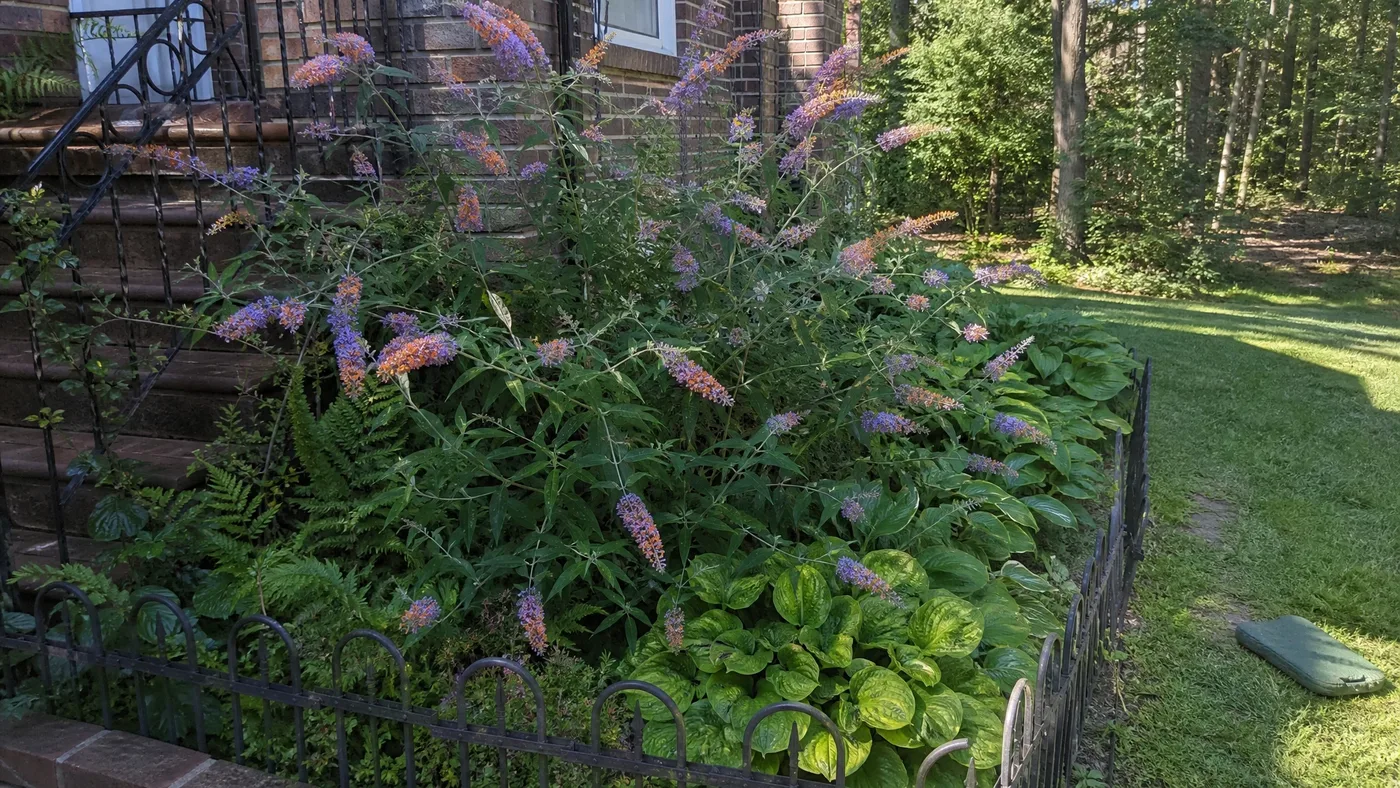
We once planted a shady corner with butterfly bushes, because the corner was empty and the plants were handy. By the end of that first summer the one in deepest shade had stretched into a thin, leaning thing with a few small flowers at the very top, and the one under the edge of a tree never filled out at all. Only the plant that caught afternoon sun looked like a butterfly bush.
That is what a bad spot does. A butterfly bush rarely dies of shade. It limps along, floppy and sparse, and gives you a long summer of disappointment.
This article talks about whether Bicolor Butterfly Bush handles shade better than standard davidii types and answers the questions customers ask us most. Read on to learn how its light needs, flower count, stems, water needs and upkeep change as the sun drops, and where we would still plant it.
How Much Light Bicolor Butterfly Bush Wants
Start with the plants Bicolor gets compared against. The whole question rests on what a standard butterfly bush asks for and on what the second parent might add.
What Standard Davidii Types Ask For
Straight Buddleja davidii is listed for full sun only. NC State Extension puts it at 6 or more hours of direct sunlight a day, and the Oregon State landscape plant database says simply full sun. Neither lists partial shade as an option. These plants were selected for sunny borders, not for tucked-away corners.
What the Globosa Parent Adds
Bicolor's other parent, Buddleja globosa, reads differently. It tolerates partial shade, meaning direct sun for only 2 to 6 hours. That is a real difference on paper.
But the shrub still prefers full sun in loamy, moist, fertile, well-drained soil in a sheltered exposure. Even the shade-tolerant parent is a sun plant that puts up with less.
So treat the globosa blood as a little leeway, not a license. First, give Bicolor the six hours if any spot in your yard offers them. If none does, choose the spot with the longest unbroken morning sun, read our full sun guide for Bicolor, and plan to manage the compromises in the sections below.
Our verdict. Bicolor gets a marginal edge over straight davidii, and a thin one. We know of no side-by-side test of the two in shade, so we read the globosa listing as permission to try a half-day spot, never a deep one.
Bloom Count in Dappled Afternoon Shade
Flowers are the first thing a butterfly bush gives up when the light drops. This is where you would see the globosa effect, if there is one.
The species blooms from June to September in full sun, and the flowers form on new growth. In dappled afternoon shade, expect the season to start later and run thinner. The spikes gather on the tops of the tallest stems, the ones that found the light, while the lower branches carry leaves and little else.
Test the Spot Before You Plant
You can judge a site in one clear day. These steps tell you more than any plant tag will.
- Visit the spot in the morning, at midday and in the late afternoon in midsummer, and note when direct sun arrives and leaves.
- Mark where trunks, fences and rooflines throw shade, since a moving shadow cuts the light more than a bright overcast does.
- Count only direct sun. Bright shade does not add to the six hours.
- Favor morning sun with dappled shade after midday over the reverse, so the plant dries off early and meets the hot hours softened.
Flowers in sun-warmed air also carry more of their honeyed scent and draw more butterflies than flowers hanging in cool shade. That matters if you grow the plant for the visitors.
Our verdict. Expect a decent but smaller show in half-day sun, and nothing in the globosa listing promises more. In bright shade the bloom is poor, and no butterfly bush fixes that.
Stem Strength of Bicolor Butterfly Bush Reaching for Sun
A butterfly bush in shade does not hold still. It grows toward the light, and what it builds on the way is weak.
The species reaches 6 to 12 feet high, so there is plenty of stem to stretch. In shade the gaps between leaf pairs lengthen and the stems thin out. They lean toward the open side, and a heavy flower spike bends them over after rain. How much Bicolor leans depends on its habit, which we cover in our growth habit guide, but shade adds to it either way.
One of the most common things customers tell us is that their plant "keeps falling over." In our rows, the side of a plant facing a taller neighbor always sends out the longest, floppiest stems.
Keep the Stems Short
The cure is cutting and placement, not props. These habits hold the stretch in check.
- Cut hard in early spring, so the plant restarts from low, sturdy buds instead of last year's leggy tips.
- Go easy on nitrogen fertilizer in shade, because it pushes soft growth that the light cannot support.
- Set the plant so open sky is on its sunny side, and leave room for the lean without crowding a neighbor.
Plenty of advice says to stake a leaning butterfly bush. We would rather move it or cut it back, because a staked stem in shade is still a weak stem.
Our verdict. Bicolor stretches and flops in shade just as straight davidii does. We see no sign that the globosa parent gives it sturdier stems.
Water Needs Under a Tree's Canopy
Shade under a tree looks cool and damp. The soil beneath it is often the driest in the yard, and that changes how you water.
The species resists drought, heat and humidity, which is why we call butterfly bush forgiving in the open. Under a canopy that forgiveness thins out. Tree roots take the water, leaves shed the rain, and a newly planted Bicolor competes for both. The globosa parent adds a wrinkle, since it wants moist, fertile soil, yet the davidii side wants drainage.
Water the Soil, Not the Calendar
Read the ground before you reach for the hose. Our watering guide for Bicolor covers the full routine, and these steps adapt it to shade.
- Poke a finger a few inches into the soil near the plant, and water only when it feels dry there.
- Soak slowly and deeply, then let the surface dry before the next watering.
- Plant at the outer edge of the canopy rather than against the trunk, where roots are thickest.
- Spread a thin layer of mulch, kept off the stems, to hold moisture without keeping the crown wet.
Do not overcorrect. Buddleja perform best in a sunny, well-drained situation, and a shady, soggy hollow breaks that rule twice.
Our verdict. Root competition hurts Bicolor more than the dim light does. Under a canopy it needs help, and in low, wet shade it needs a different home.
Upkeep in the Shadier Borders We Planted
A shaded Bicolor costs you more attention than a sunny one. Pruning, airflow and leaf health are where the extra work goes.
Prune for Light and Air
Oregon State advises you to prune in early spring because the large flowers are borne on new growth. Do that, and in shade go one step further. Remove the thin, weak stems first, then thin the crowded center so light and air reach inside. Our guide to when and how to prune Bicolor has the cuts in detail.
Watch for Mildew and Pests
Shade slows drying, and damp leaves sitting in still air invite powdery mildew. Water at the base in the morning, never over the foliage, and keep the center open. Check the underside of leaves every week or so, because weak, stretched growth is where trouble starts. Our pests and problems guide shows what to look for.
Deer are one chore shade does not add. The species resists deer, and dim light does not change that.
Our verdict. Upkeep rises a notch in half-day sun and a good deal in deep shade. We know of nothing in Bicolor's parentage that lowers its mildew risk, so give it airflow and do not count on luck.
Bicolor Butterfly Bush in Shade, Honestly Weighed
Here is the plain judgment after all five criteria. This table shows where Bicolor can bend toward shade and where it cannot.
| Light Situation | What to Expect | Our Call |
|---|---|---|
| Full sun, 6 or more hours | Full bloom, firm stems, easy upkeep | Best choice |
| Morning sun, dappled afternoon shade | Later, smaller bloom and some lean | Workable with pruning |
| Bright shade under a canopy | Sparse flowers, floppy stems, dry soil | Not recommended |
| Deep shade | Thin growth and almost no bloom | Do not plant |
The globosa parentage is real, and so is its partial-shade listing. What it buys is a margin at the edge of the sun requirement, which is why the middle row works at all. It does not buy a shade plant, and the sources agree that even globosa prefers sun.
If you are weighing a spot for one of ours, tell us how many hours of direct sun it gets. We will say plainly whether Bicolor fits.
Where Bicolor Butterfly Bush Earns a Half-Day Spot
Bicolor bends toward shade a little further than a straight davidii, and no further than half a day of real sun. Give it the light first, then cut hard each spring, water the soil rather than the shade, and keep air moving through the center.
Bicolor Butterfly Bush
Nursery-grown Bicolor Butterfly Bush in sizes from Quart, shipped to your door.
From $25.33
Shop Now →The spot that did best in that old corner of ours caught sun from morning until early afternoon. It flowered a little later than the plants in open ground, and it was still carrying color when the others had gone to seed that autumn. Customers keep coming back to us for a straight answer about where Bicolor will and will not flower, because we are growers with our own farms who grow and sell top-quality shrubs and would sooner tell you no than sell you a poor spot.